
Production technologies
Roller blinds for refrigerated shelving
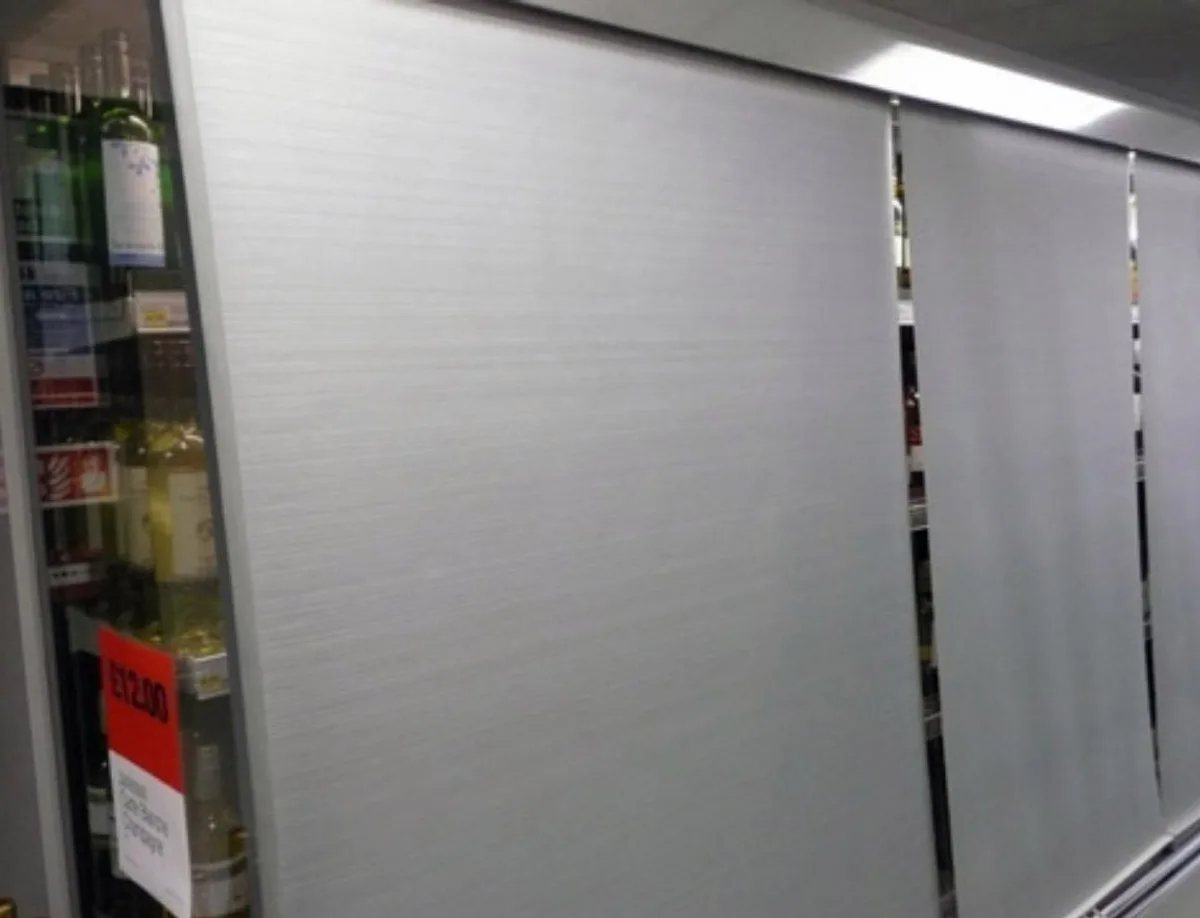
Night blinds pulled down over open refrigerated display cases after trading hours. They limit the escape of cold from the case, take part of the load off the refrigeration system and protect the goods from drying out. We make them to the size of a specific case – symbols KP-NB3 and KPP-NB4.
Why night blinds
An open case keeps working when the shop is closed
An open display case gives cold away to the sales floor around the clock – including at night, when nobody reaches into it. A blind that has been pulled down closes the front of the case and limits the escape of cold into the surroundings.
Less air exchange means less load on the refrigeration system during the night hours and slower drying of the goods laid out on the shelves. The blind does not change the structure of the case – we add it to a unit that is already in service.
What we make
Blinds matched to the type of case
KP-NB3 blind
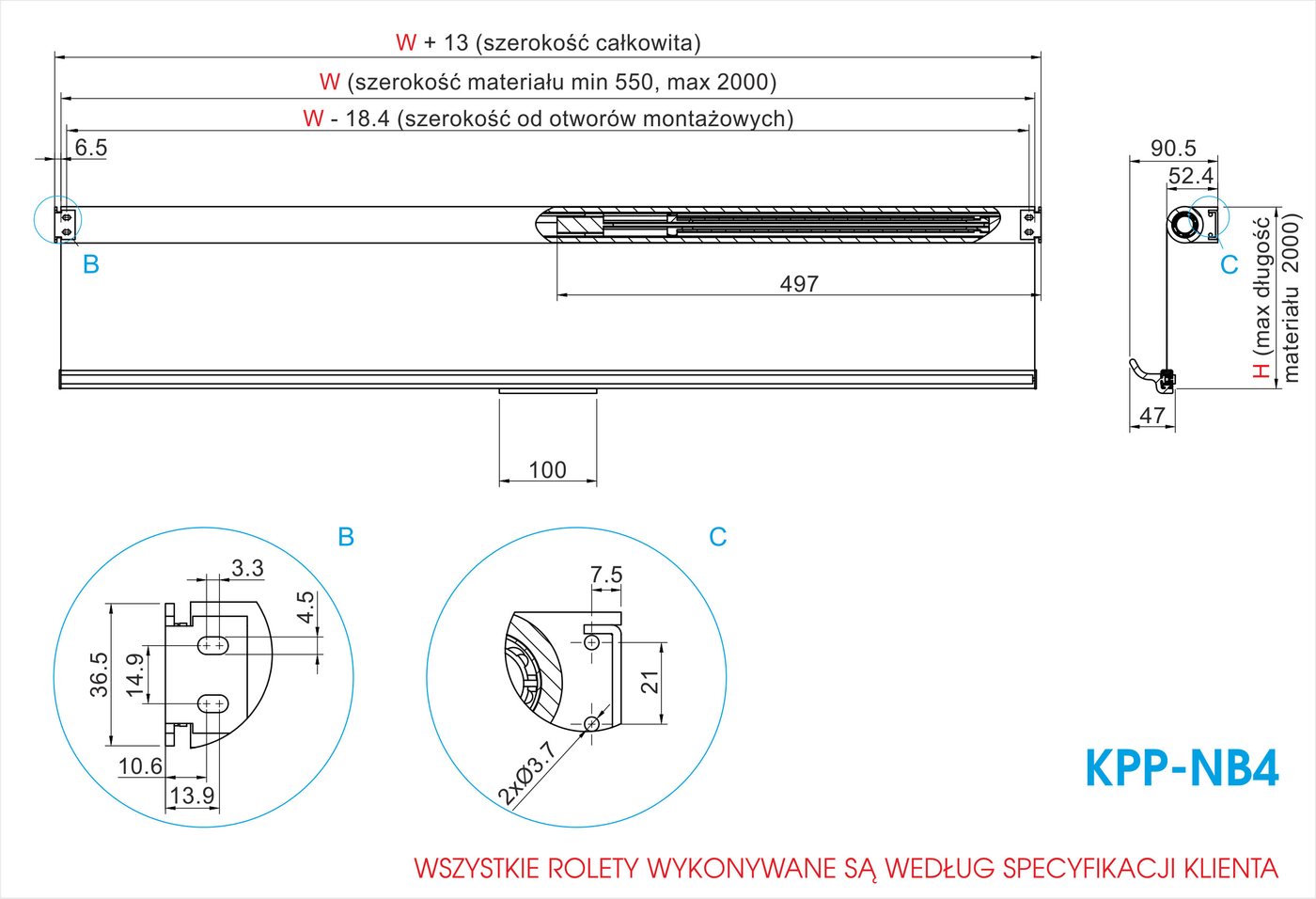
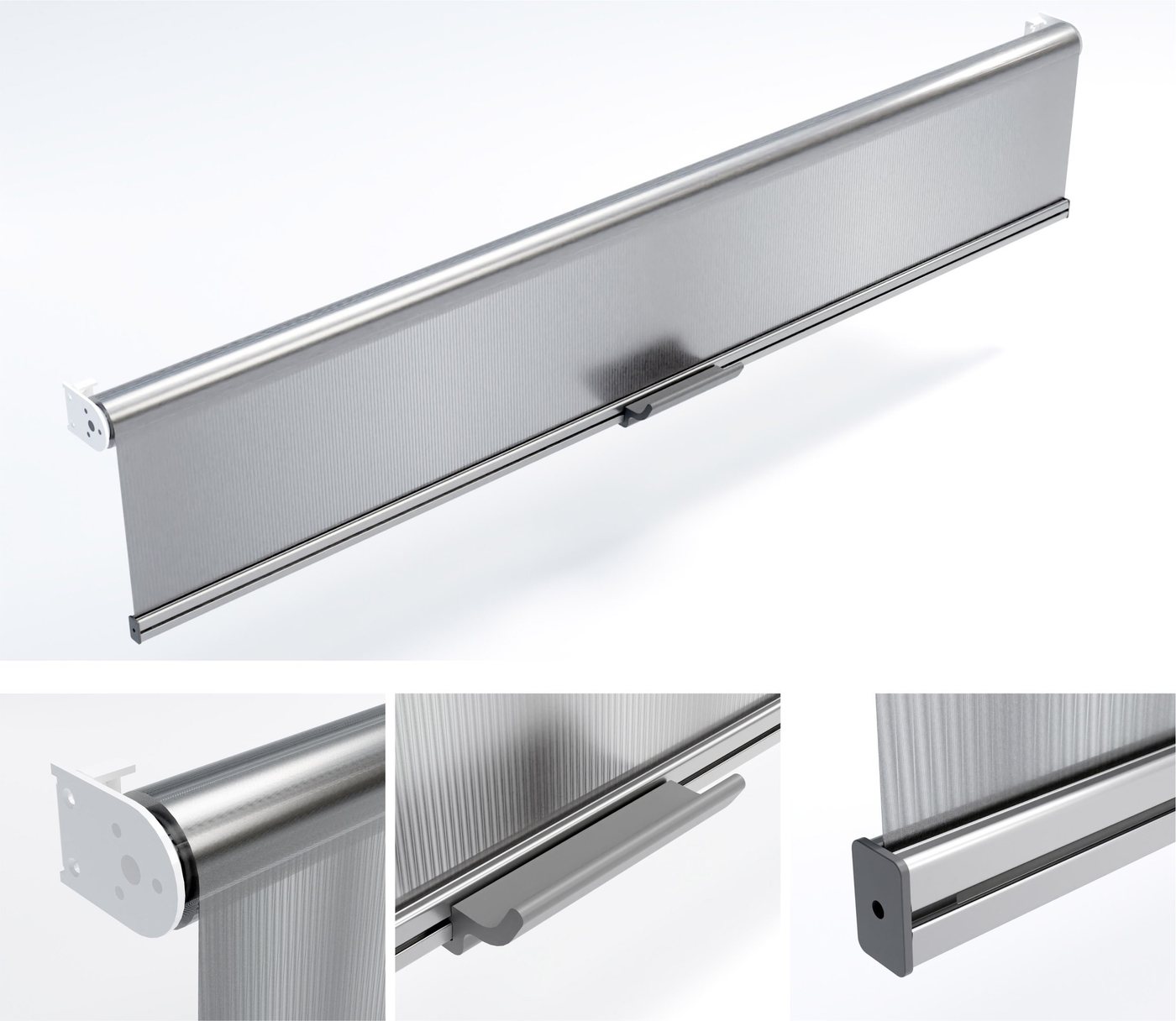
The basic night blind for refrigerated display cases, with a top cassette and a weighted bottom bar, matched to the size of the front of the unit.
KPP-NB4 blind
A version for cases with a different front geometry and greater build heights – the same material and the same operation.
Blinds for island cases
They close an open island from the top or from the front, depending on the design of the unit and the way the goods are displayed.
Blinds for wall-site cases
A cassette above the front of the case and fabric pulled down to the bottom bar – the most common solution in grocery shops.
Motor-driven versions
Instead of manual operation, a drive that rolls the blind up at the touch of the staff. Made to order, once the dimensions and the control method are agreed.
Sets for cabinet manufacturers
Blinds in repeatable sizes supplied as a fitting for newly manufactured display cases.
What you gain
Why closing the cases at night pays off
Less cold escaping
A blind that has been pulled down closes the front of the unit and limits the air exchange between the inside of the case and the sales floor.
Easier work at night
Smaller losses of cold mean less load on the refrigeration unit during the hours when the shop is not trading.
Protection of the goods
Restricted air movement above the shelves slows down the drying of products kept on open display.
Reflective layer
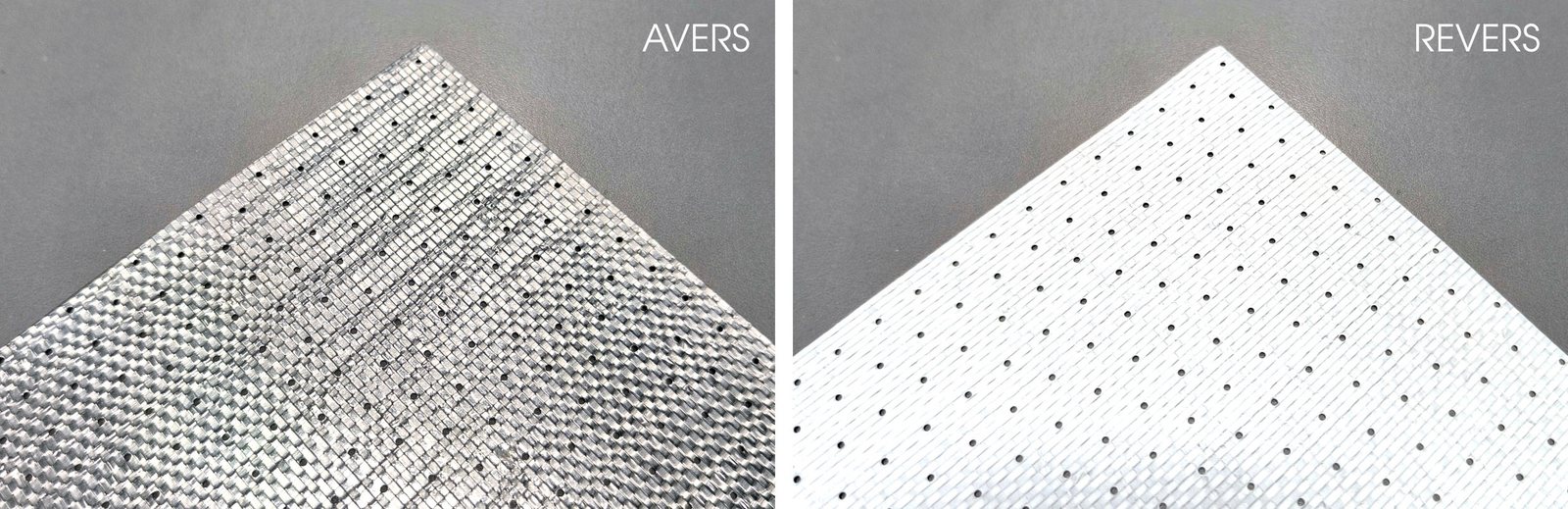
The coated fabric turns heat away from the front of the case instead of letting it through into the unit.
Made to measure
The blind is cut for a specific case, so no gaps are left at the sides through which cold would escape anyway.
Simple operation
Pulling the blind down and releasing the lock takes a few seconds – the staff needs no training and no tools.
Technical parameters
Materials and construction
- Material
- Coated perforated fabric – reflective face, white reverse
- Symbols
- KP-NB3 and KPP-NB4
- Mounting
- Cassette at the top of the unit, weighted bar at the bottom of the fabric
- Types of cases
- Open display cases – island and wall-site
- Operation
- Manual, with a lock in the closed position
- Variants
- Motor-driven versions to order
- Construction
- Made to the size of the case – fabric width 550–2000 mm, length up to 2000 mm
Production process
From measuring the case to a finished blind
Every blind is made for a specific unit – we start from the dimensions of the case and finish with sets ready to be fitted in the shop.
-
Measuring the case
We establish the type of unit, the width and height of the front and the place where the cassette can be seated.
-
Choice of version
Based on the geometry of the case we select the KP-NB3 or KPP-NB4 version and the method of operation – manual or motor-driven.
-
Preparing the material
The coated fabric is cut to size, keeping full coverage of the front together with an overlap at the sides.
-
Assembling cassette and bar
We assemble the top cassette with the mechanism and the weighted bottom bar that keeps the fabric vertical.
-
Testing the mechanism
We check the full cycle – pulling the blind down, the action of the lock and the even rolling of the fabric back into the cassette.
-
Dispatch of the sets
The blinds are packed in sets labelled with their dimensions, ready to be fitted in the shop without further adjustment.
Applications
Where our blinds work
- Island refrigerated display cases
- Wall-site refrigerated display cases
- Serve-over counters and display cabinets
- Convenience and neighbourhood shops
- Chain stores and discounters
- Shops at petrol stations
Production technologies
See how production works
Welding of magnetic gaskets for refrigeration
Gaskets and magnetic inserts
PVC profile extrusion, rigid and flexible
Extruded profiles for refrigeration
Thermoforming
Vacuum-formed parts
Plastics injection moulding
Moulded parts for refrigeration and HoReCa
Monoblock chillers
Monoblocks and condensing units
Thermal break profiles
Two profile families and custom sections
PU insulation of refrigeration furniture parts
Components with a polyurethane core
A few seconds at closing time – and the case stops warming itself against the sales floor all night long.
- Coated fabric with a reflective layer that turns heat away from the front of the case.
- Made to measure – for island and wall-site cases, in various widths and heights.
- Manual operation with a lock, motor-driven versions to order.
FAQ
Frequently asked questions about night blinds
Did not find your answer? Write to us – we will match the blind to the dimensions and type of your case.
Ask a questionCan a blind be fitted to a case that is already in service?
Yes – that is the main use of night blinds. The cassette is seated above the front of an existing open case, without interfering with the refrigeration system or the structure of the unit. We need the dimensions of the front and information about the type of case.
How is a blind matched to a particular case?
The type of unit decides – island or wall-site – together with the width and height of the front. On that basis we indicate the KP-NB3 or KPP-NB4 version and cut the fabric to size so that it covers the whole front with no gaps at the sides.
How is the blind operated at the end of the day?
The blind is pulled down by hand until the lock holds the fabric in the closed position. In the morning the lock is released and the fabric rolls back into the cassette. Motor-driven versions are made to order.
Does the blind get in the way of the display?
No, because it works outside trading hours. During the day the fabric is rolled up in the cassette above the front of the case, so the shelves and the goods stay fully exposed.
How is the fabric of the blind cleaned?
The coated surface is smooth, so wiping it with a damp cloth and a mild detergent is enough. Abrasive agents and sharp tools are not used, so that the reflective layer is not damaged.
Discuss your project
We will match blinds to your display cases
Tell us the type of your cases and their dimensions – we will prepare a list of blinds and a made-to-measure quotation.
Get in touch
We usually reply within 24 working hours.