
Production technologies
PU insulation of refrigeration furniture parts
We fill doors, drawer fronts, lids, panels and partitions of refrigeration cabinets and appliances with polyurethane foam. The foam forms an insulating core between the skins – its quality and evenness decide whether the component stays free of frost and condensation along the edges.
Why PU insulation
The core decides how the whole cabinet performs
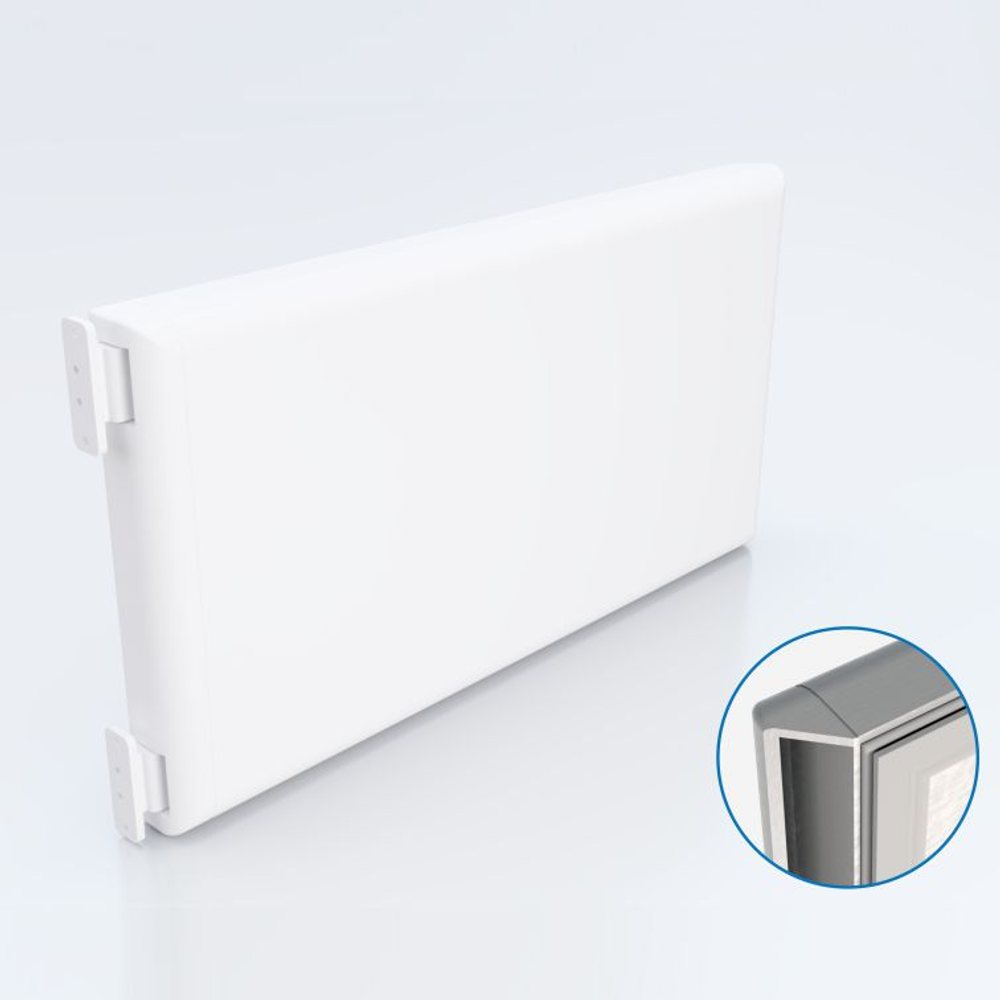
An insulated component is more than its skin. Between the two shells – steel or plastic – a polyurethane foam core is created that stops the flow of heat and stiffens the entire structure.
If the foam fills the mould unevenly or misses a corner, a thermal bridge appears at that spot: the component freezes over, collects condensation and wears the gasket faster. That is why we carry out the filling in moulds matched to each specific part.
What we insulate
Components with a polyurethane core
Insulated doors
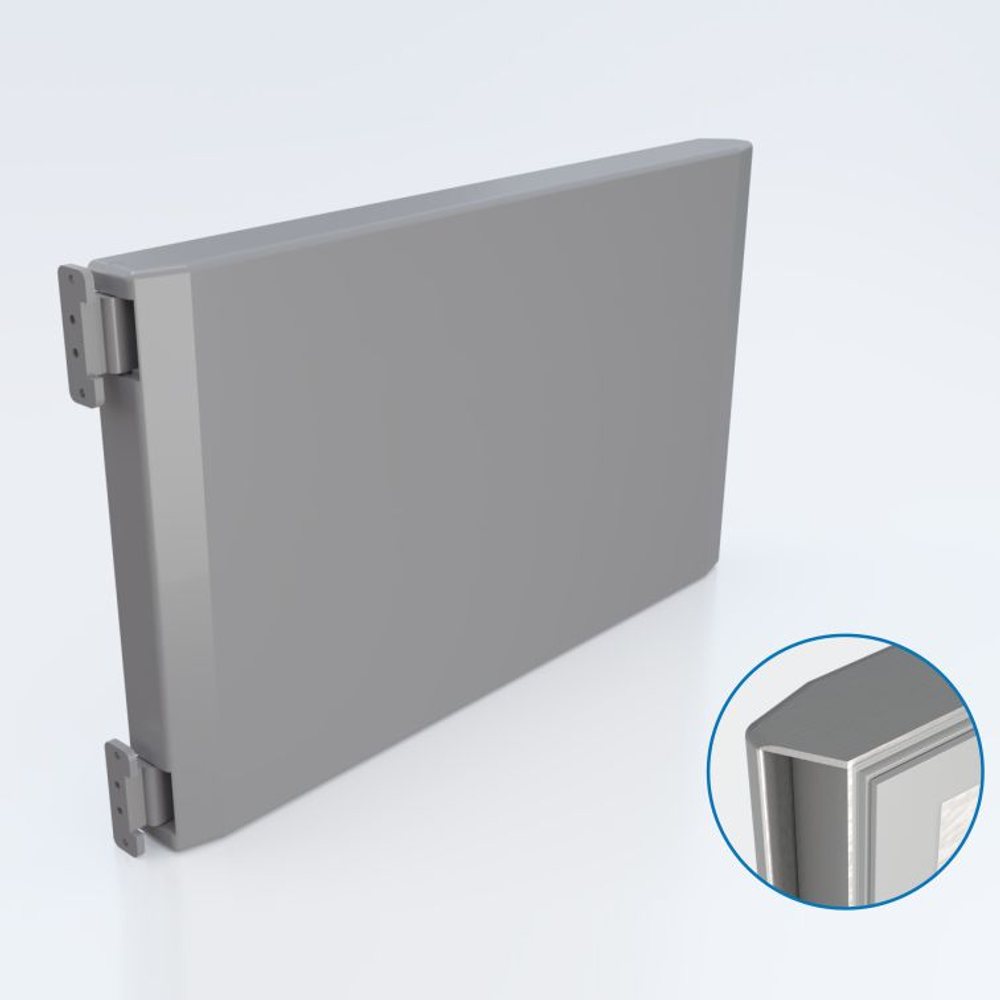
The catalogue DF-LCH and DF-LCHE ranges as well as made-to-measure builds – with a perimeter profile and a magnetic gasket.
Drawer fronts
Fronts for refrigerated counters and drawer assemblies, insulated in the same way as doors and matched to the module of the cabinet.
Lids and covers
Lids for display counters, islands and chest freezers – insulated opening components where weight and stiffness both matter.
Panels and partitions
Enclosure panels, internal partitions and housing parts filled with foam, supplied as ready components for assembly.
What you gain
Why it pays to have us insulate the part
No thermal bridges
We match the mould and the way the foam is injected so the core reaches the edges and corners – the places where cold spots usually appear.
Matched to the temperature
A chilled cabinet needs a different build from a freezer one. We set the core thickness and the construction against the intended operating temperature.
Made to measure
You do not have to adapt your cabinet to a catalogue. The component is built to the dimension that follows from your own design.
Choice of skin
The shells are made of steel or plastic – the material follows the look of the cabinet, the loads and the hygiene requirements.
A ready component
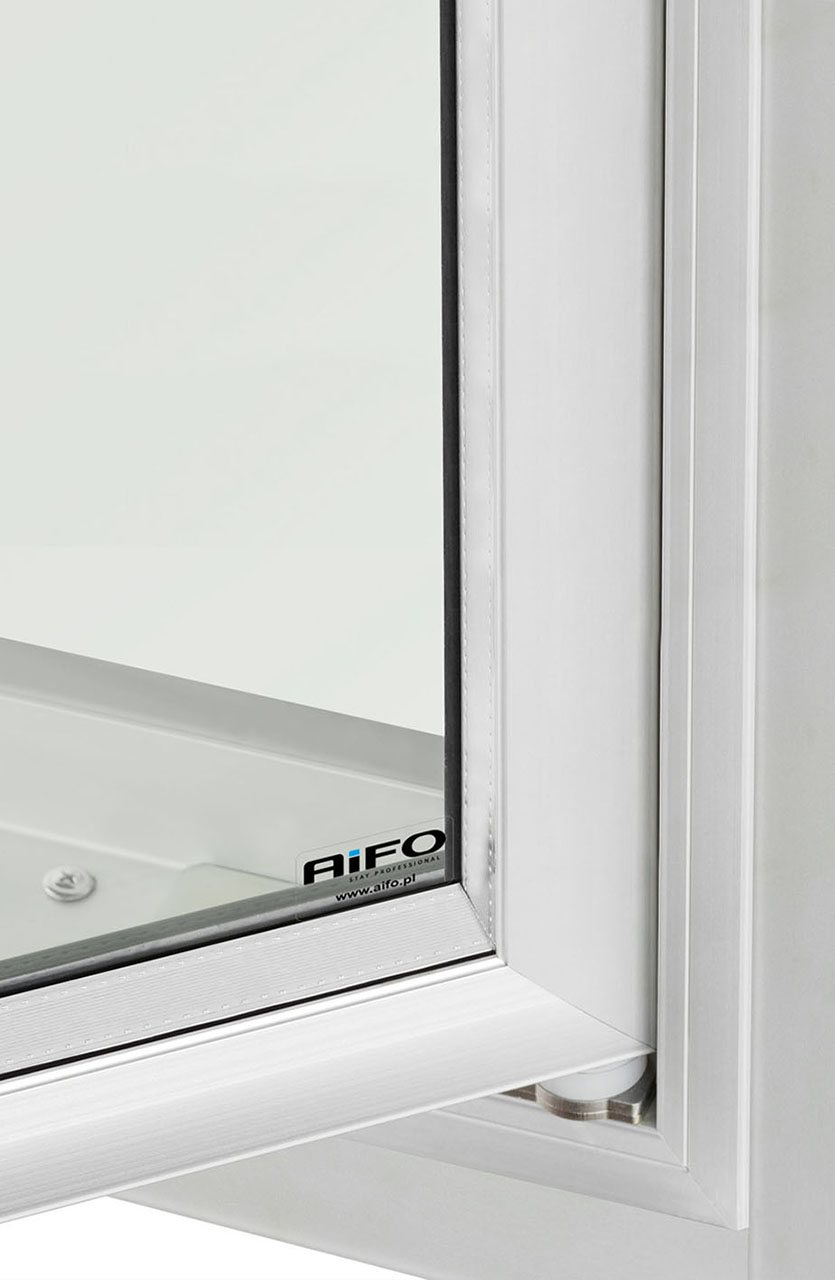
The part can arrive complete: with a perimeter profile, a magnetic gasket and hardware, or in a bare version for your own assembly.
Repeatable in series
The same part made in the same mould keeps its dimension and its filling, so every following cabinet is assembled in exactly the same way.
Technical parameters
Build and equipment
- Type of component
- Doors, drawer fronts, lids, panels, internal partitions
- Skin
- Steel or plastic – selected for the application
- Core
- Polyurethane foam filling the space between the skins
- Build
- Made to the customer dimensions, also as a match for an existing part
- Catalogue ranges
- Insulated doors and fronts DF-LCH and DF-LCHE
- Additional equipment
- Perimeter profile, magnetic gasket, hardware and hinges
- Operating temperature
- Chilled and freezer builds – agreed at the quotation stage
Production process
From the skins to a finished component
An insulated component is built step by step: we prepare the skins, close them in a mould, fill them with foam, let the core cure and only then fit the profile, the gasket and the hardware.
-
Establishing the requirements
We collect the dimension of the component, the operating temperature of the cabinet and the way it is installed. On that basis we choose the construction and the core thickness.
-
Preparing the skins
We make the shells from steel or plastic – bent, formed and cut to the final dimension of the component.
-
Closing the mould
The skins are positioned and closed in a mould that holds the geometry of the component throughout the filling.
-
Foam filling
Polyurethane foam is injected into the component, with control over its even distribution and its reach into the edges and corners.
-
Curing and demoulding
The component stays in the mould until the core has set, and after demoulding we check its dimension and flatness.
-
Fitting the equipment
We install the perimeter profile, the magnetic gasket and the hardware – if the component is to arrive complete.
-
Inspection and packing
We check the dimensions, the seating of the gasket and the surface quality, then protect the component for transport.
Applications
Where our components work
- Doors of chilled and freezer chambers
- Drawer fronts of refrigerated counters
- Lids of display counters and islands
- Enclosure panels of appliances
- Internal partitions of chambers
- Replacement parts for cabinets already in service
Production technologies
See how production works
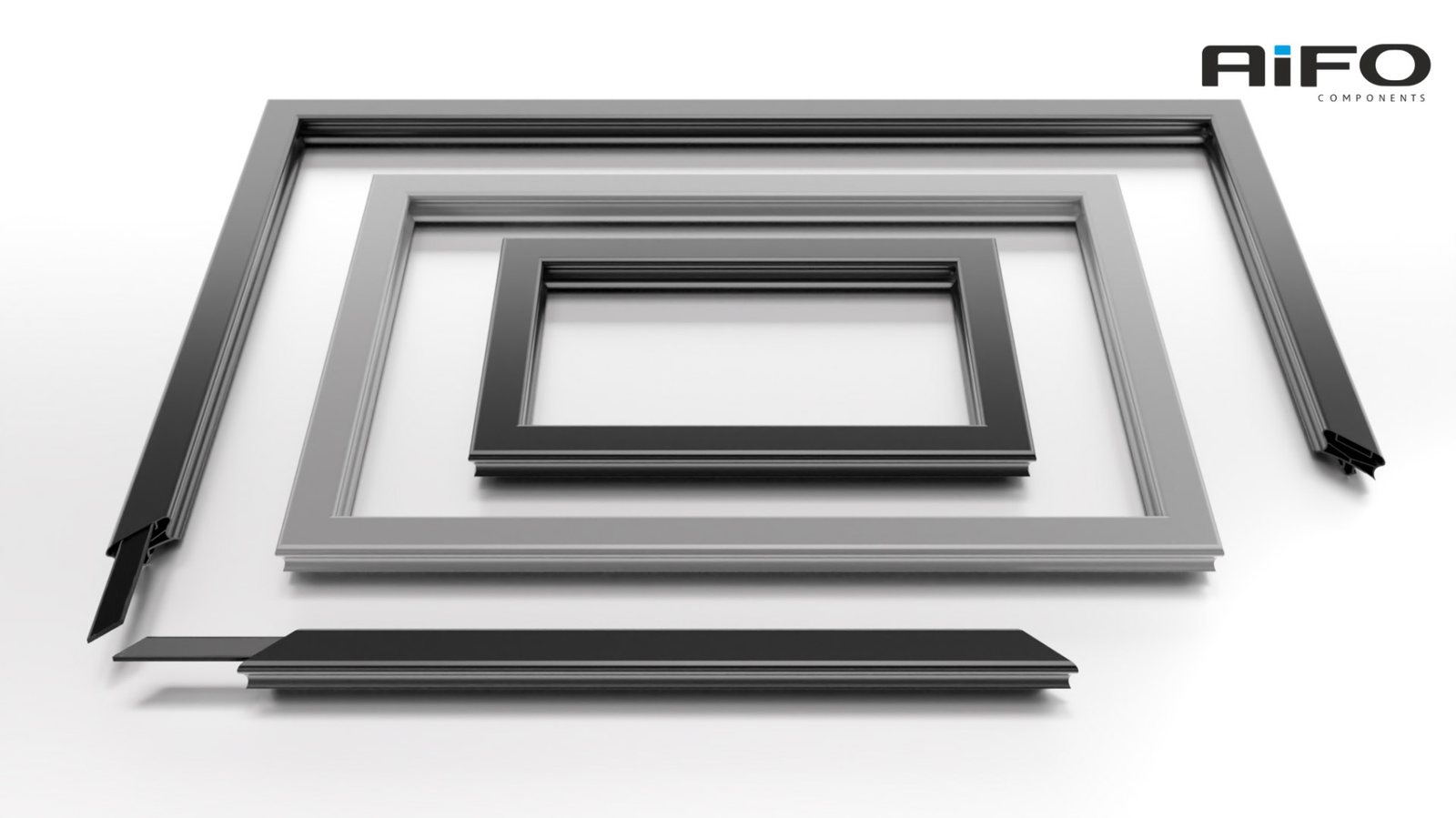
Welding of magnetic gaskets for refrigeration
Gaskets and magnetic inserts
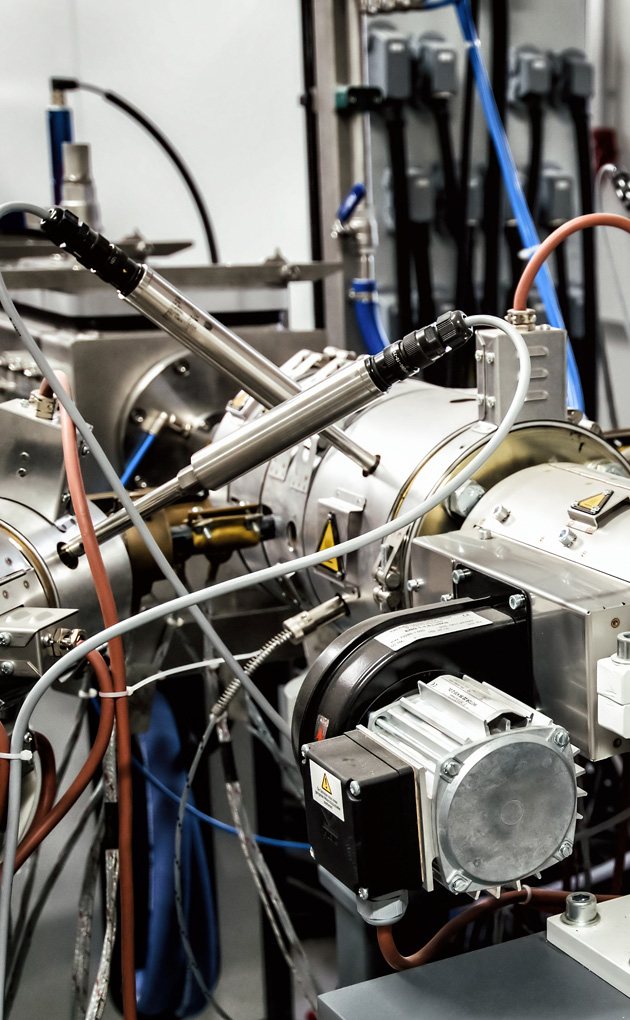
PVC profile extrusion, rigid and flexible
Extruded profiles for refrigeration
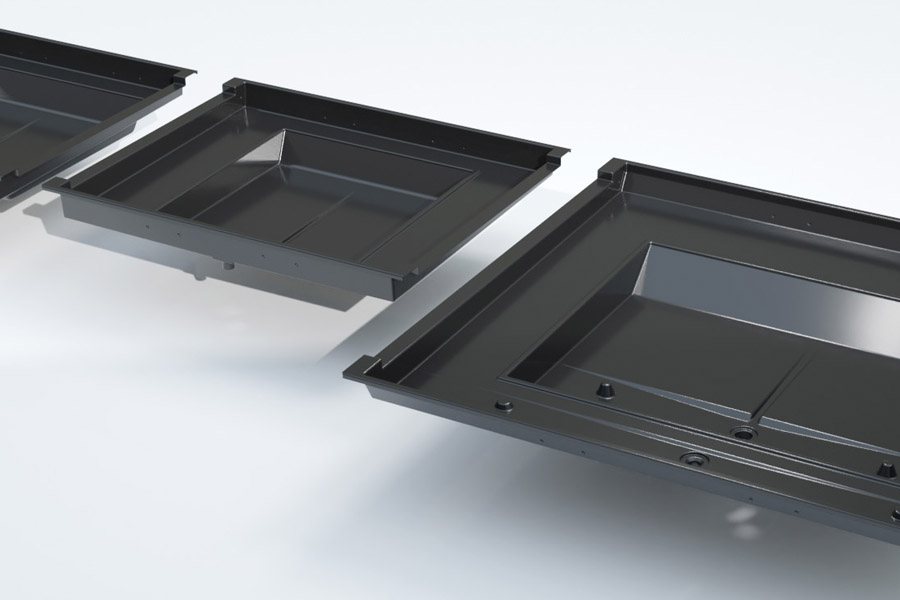
Thermoforming
Vacuum-formed parts
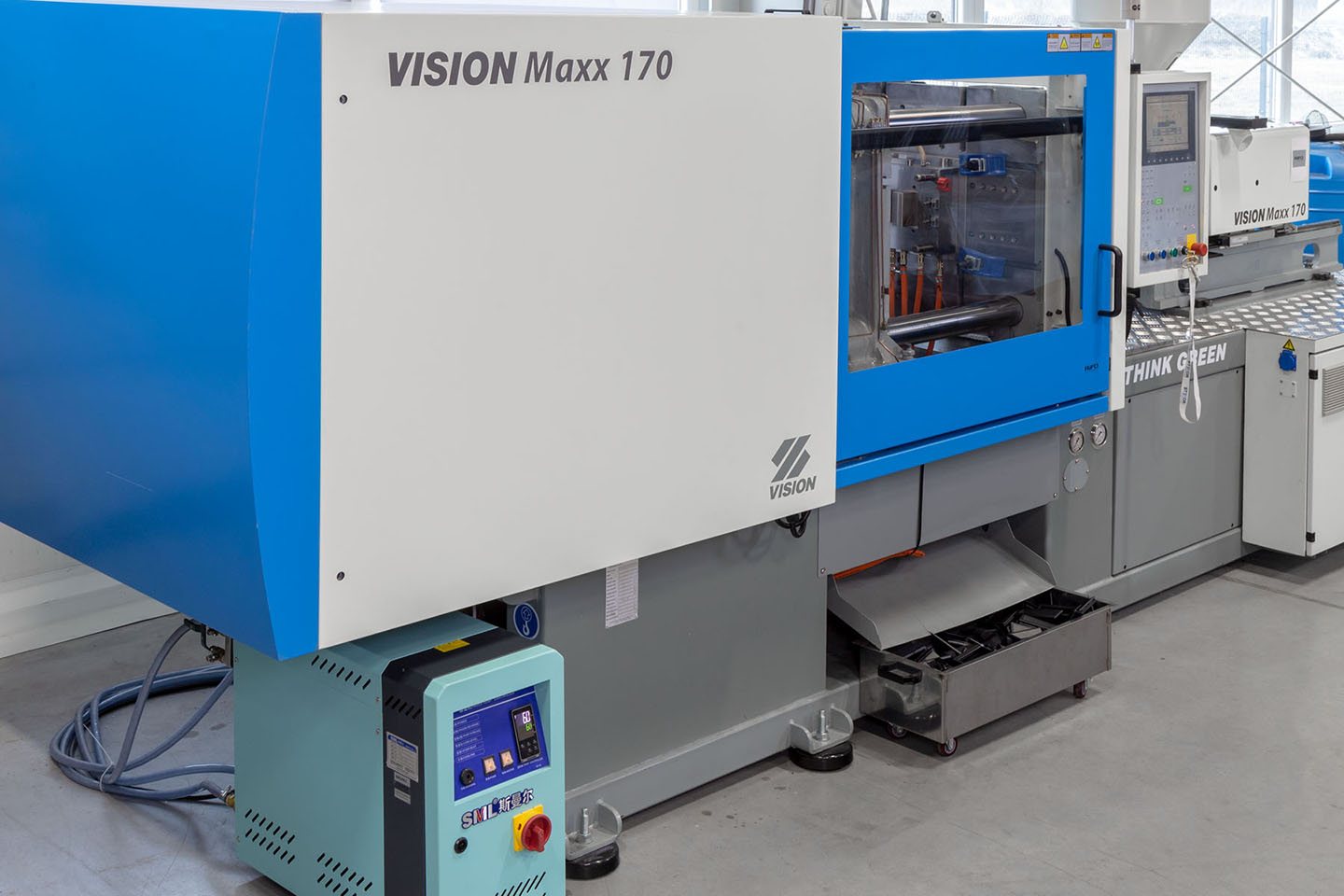
Plastics injection moulding
Moulded parts for refrigeration and HoReCa
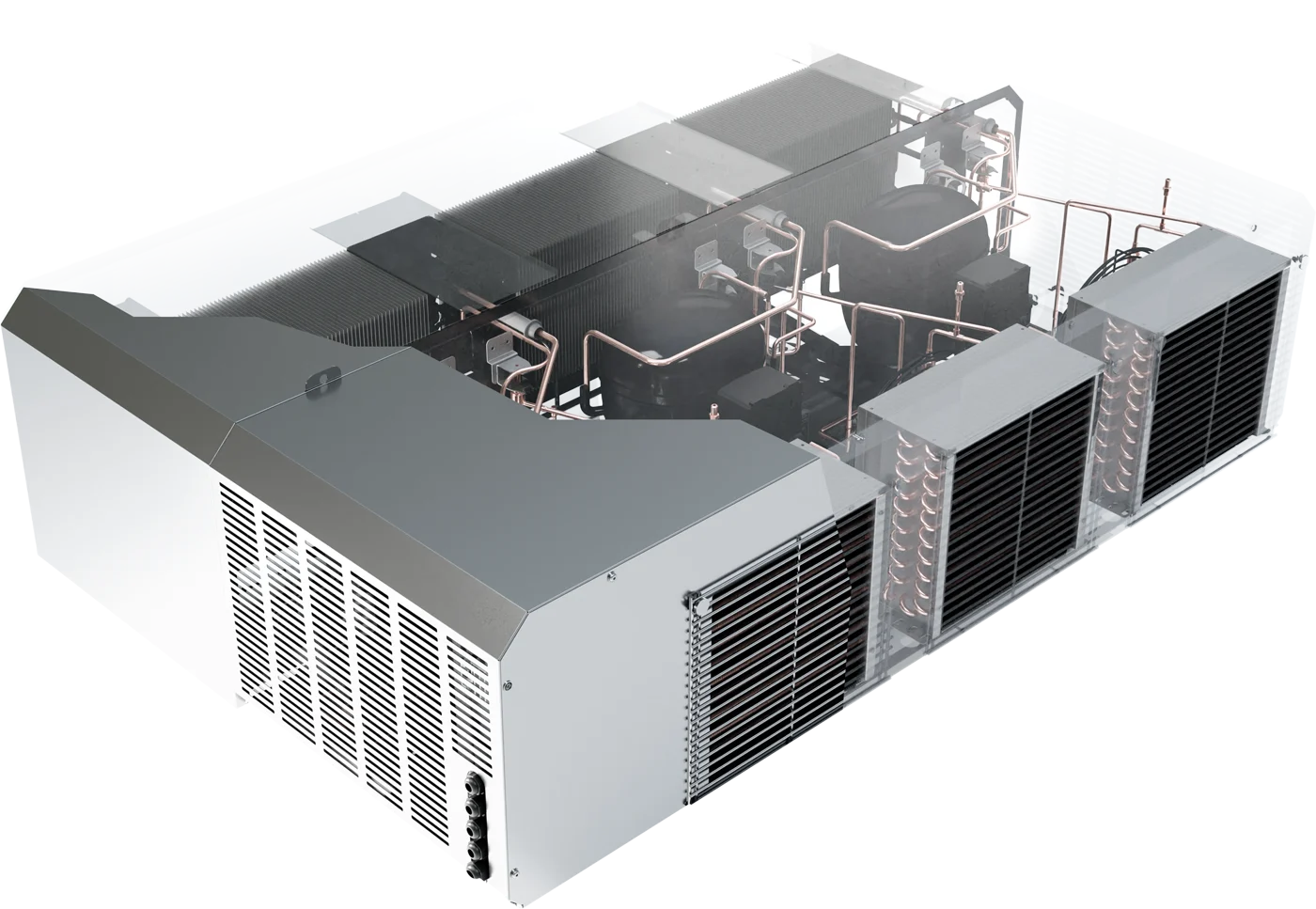
Monoblock chillers
Monoblocks and condensing units
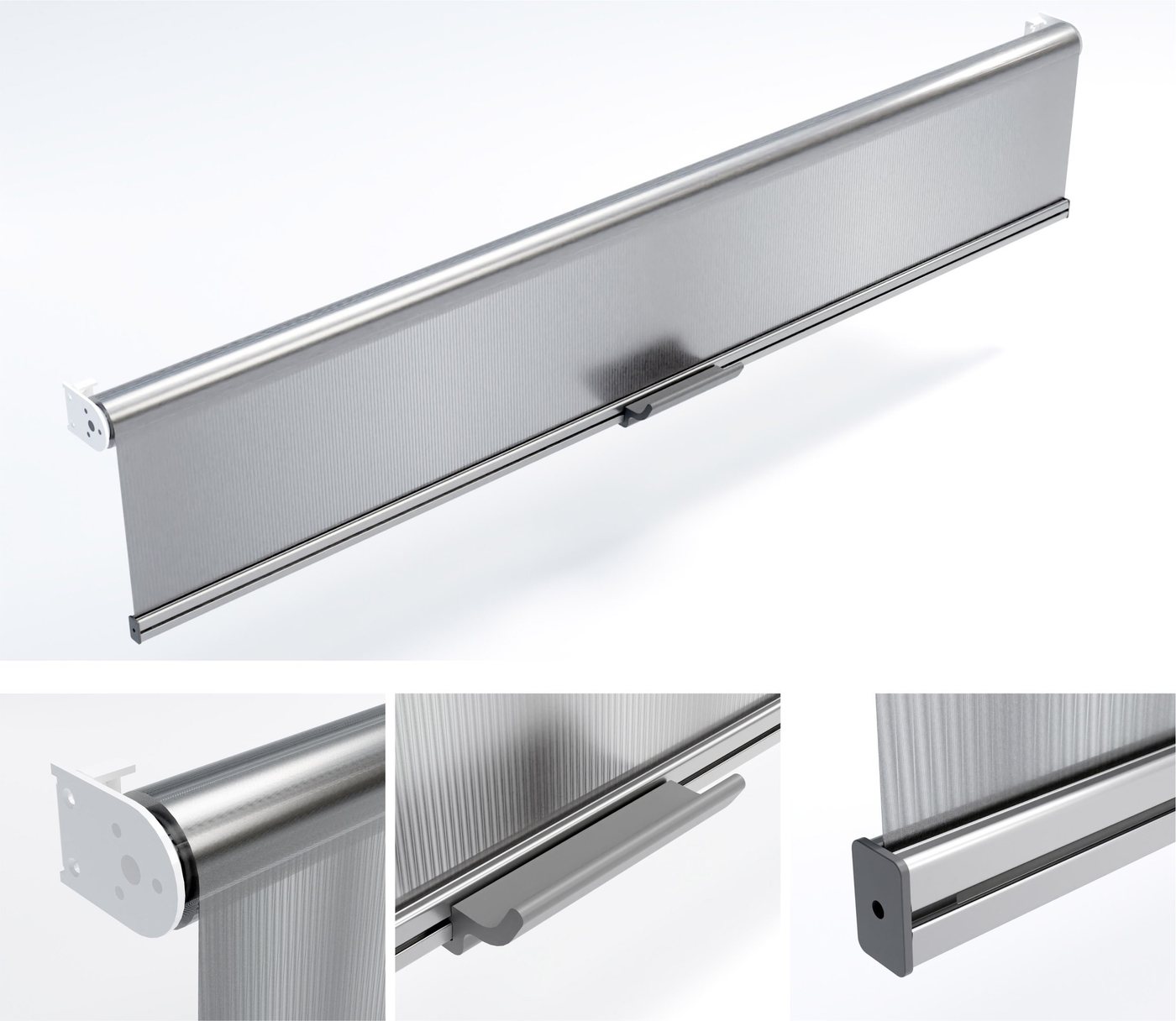
Roller blinds for refrigerated shelving
Blinds matched to the type of case
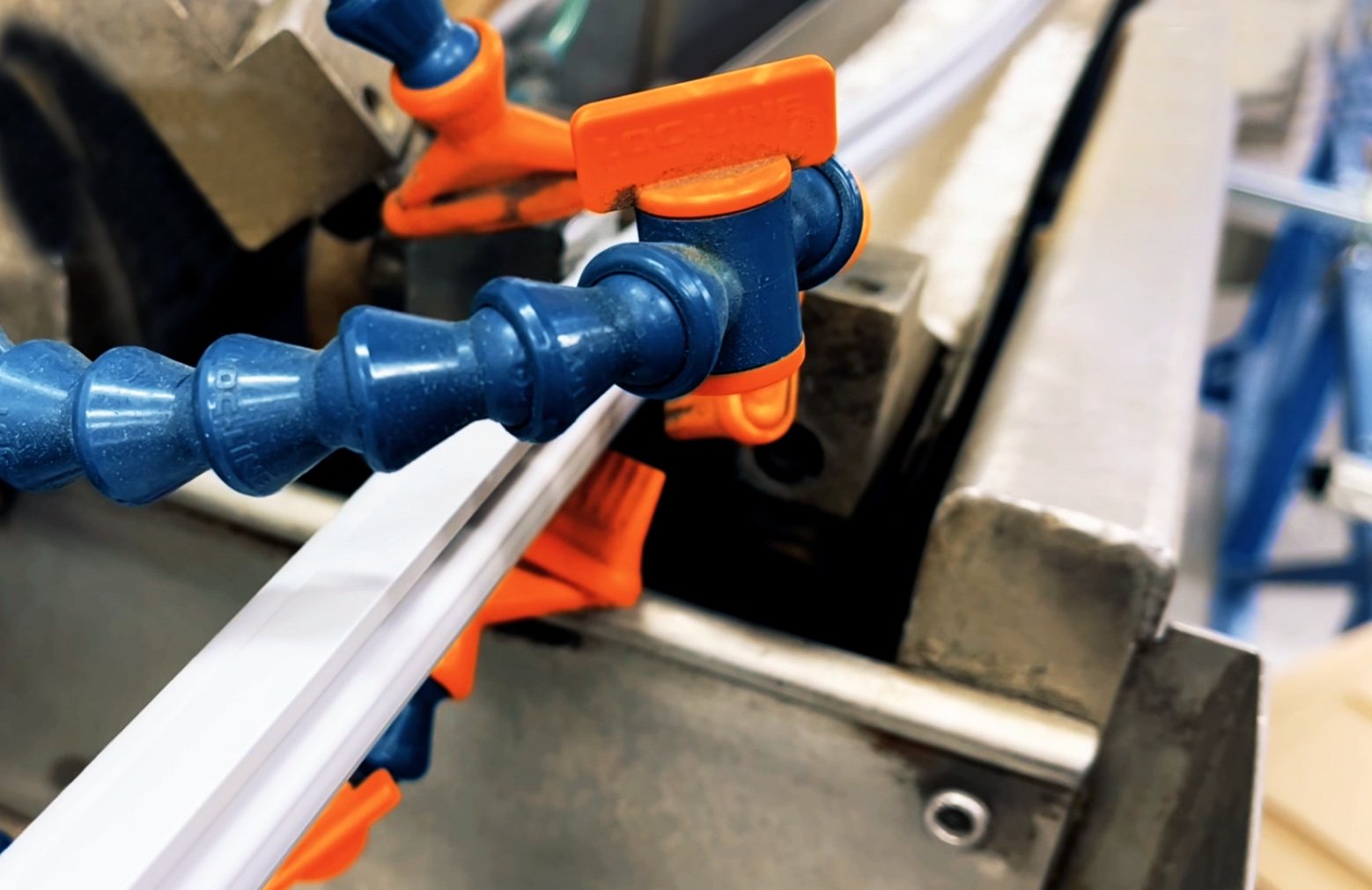
Thermal break profiles
Two profile families and custom sections
A core distributed evenly – including the corners, where thermal bridges appear most often.
- Steel and plastic skins with a core filled with PU foam.
- Catalogue ranges of insulated doors and fronts, DF-LCH and DF-LCHE.
- Made to the customer dimensions – with or without hardware.
FAQ
Frequently asked questions about PU insulation
Did not find your answer? Write to us – we will assess the component and match the build to its operating temperature.
Ask a questionHow do you match the component to the operating temperature?
The starting point is the intended internal temperature and the conditions around the cabinet. A chilled cabinet gets a different build from a freezer one – they differ in core thickness and in the construction of the edges. The specific parameters are agreed at the quotation stage, once we know the application.
What do you do to avoid thermal bridges along the edges?
Edges and corners are the places where foam most easily falls short. That is why the component is filled in a mould matched to the part and we control how the foam is injected, so the core stays continuous around the perimeter as well. On doors there is also the perimeter profile and the gasket, which close the joint between the component and the cabinet.
Will the component arrive with a gasket and hardware?
Yes, if that is what you need. Doors and fronts are supplied complete – with a perimeter profile, a magnetic gasket and hardware – or without hardware, if you fit them into your own system.
Will you make a non-standard component, outside the catalogue?
Yes. Alongside the catalogue DF-LCH and DF-LCHE ranges we build components to the customer dimensions: unusual door formats, fronts for your own drawer modules, and lids and panels of individual shapes.
Can you make a replacement part for a cabinet already in service?
Yes. All we need are the dimensions and photographs of the existing component together with information on how it is fixed. We reproduce the part as a spare, with the same type of skin and the same equipment, so that it fits the cabinet without any rework.
Discuss your project
We will insulate your component
Send us a drawing of the part, or describe the cabinet and its operating temperature – we will select the skin, the core thickness and the equipment, and then prepare a quotation.
Get in touch
We usually reply within 24 working hours.