Staffing crisis in refrigeration – a problem that accelerates innovation
The European commercial refrigeration market is facing a growing shortage of qualified refrigeration installers and service technicians. F-gas regulations (EU Regulation No. 517/2014) are tightening certification requirements for refrigerant handlers – on the one hand raising safety standards, on the other drastically narrowing the available pool of authorized technicians.
For investors in the retail, foodservice and food logistics sectors, each hour of work by a certified F-gas service technician represents an increasingly high cost and hard-to-predict availability. So there is a growing demand for refrigeration equipment that shortens or completely eliminates the need for specialized installation at a facility.
The answer is refrigeration monoblocs – integrated compressor systems operating on a plug-and-play basis, designed to serve cold rooms in the medium temperature (MT) and low temperature (LT) ranges.
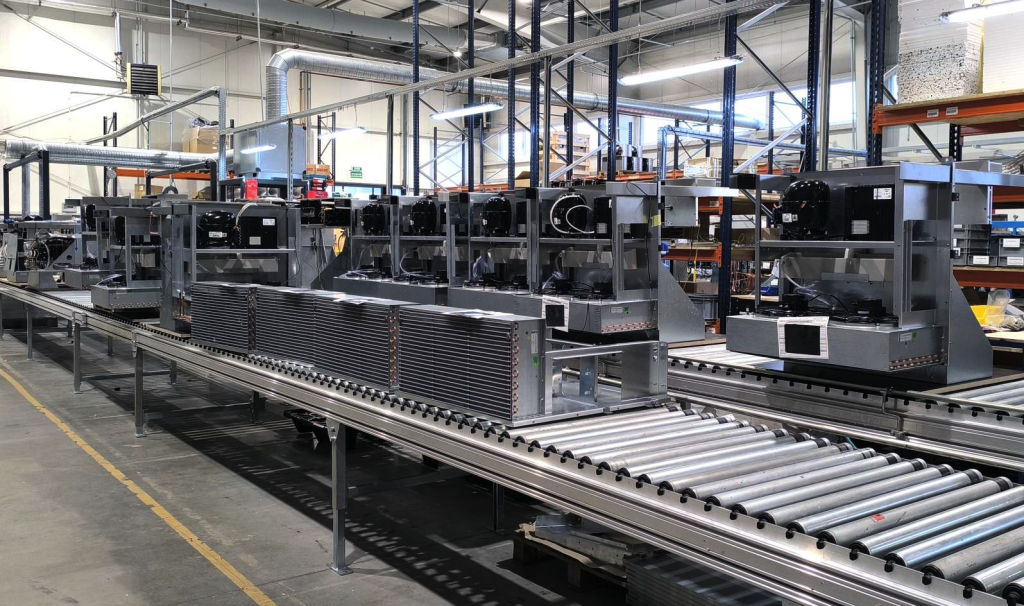
What is a refrigeration monobloc and how does it work?
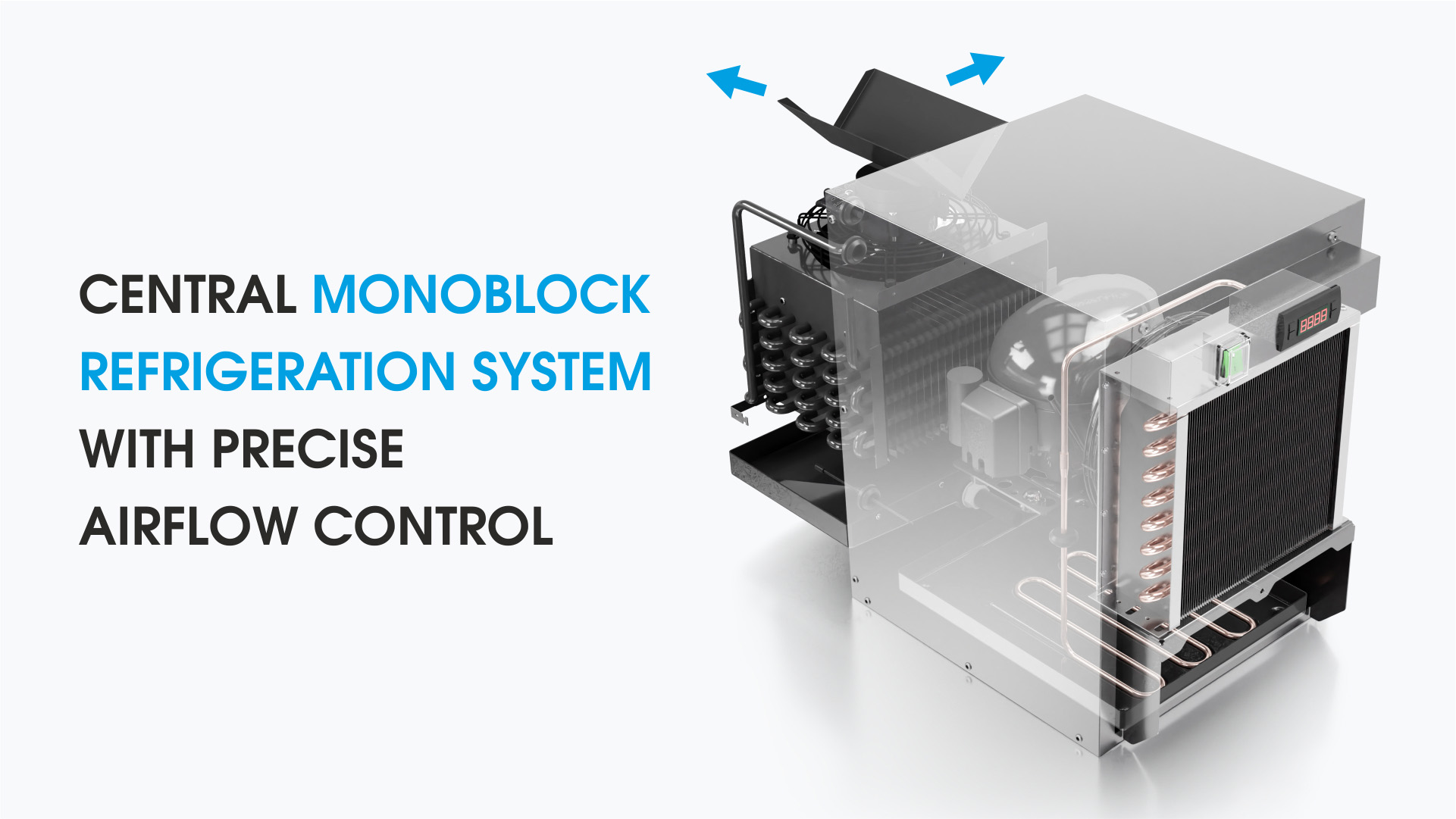
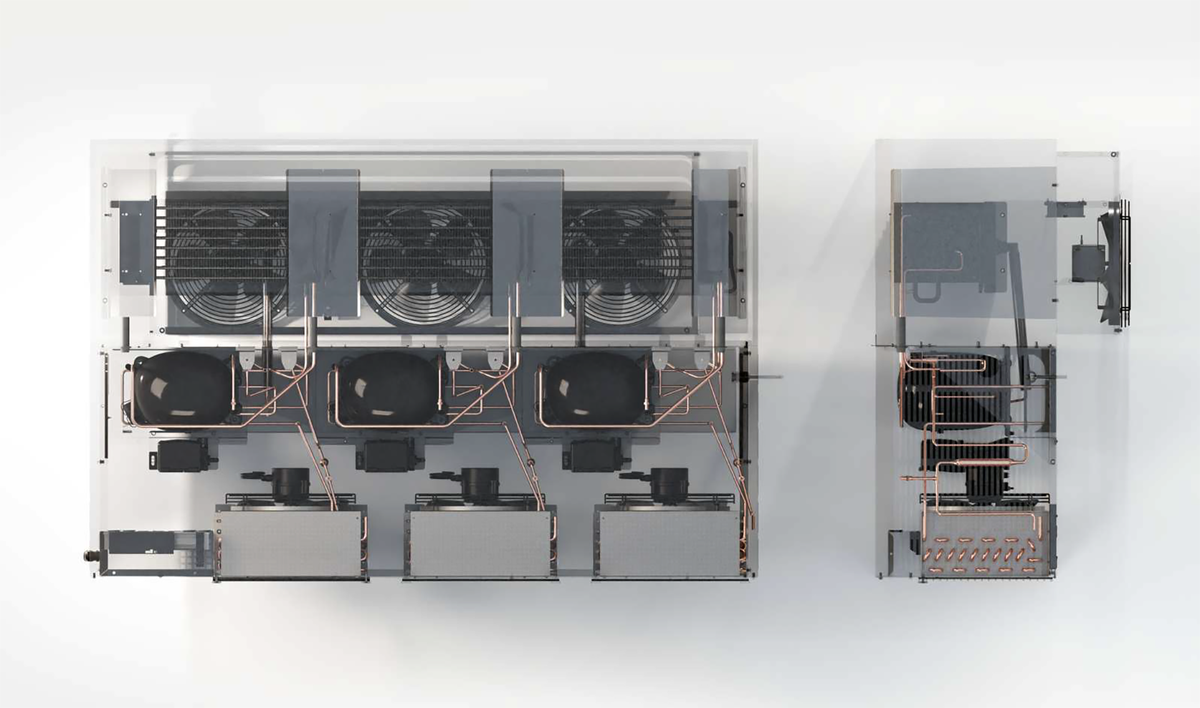
A refrigeration mon oblock is a factory-assembled, sealed refrigeration system based on a left-handed Linde circuit, enclosed in a single stainless steel housing with polyurethane (PUR) insulation. Unlike traditional chillers that require on-site installation, the monoblock arrives at the facility as a finished unit – filled with refrigerant, tested and ready for connection.
Key components of the system
- Hermetic compressor (optional inverter) – from reputable manufacturers such as Embraco, allows infinite regulation of cooling capacity and adjustment to the variable load of the cold room.
- Cu-Al air condenser – copper-aluminum technology provides high efficiency with forced air flow and high resistance to external conditions.
- Fin evaporator with epoxy or hydrophilic coatings to reduce electrochemical corrosion and improve defrosting.
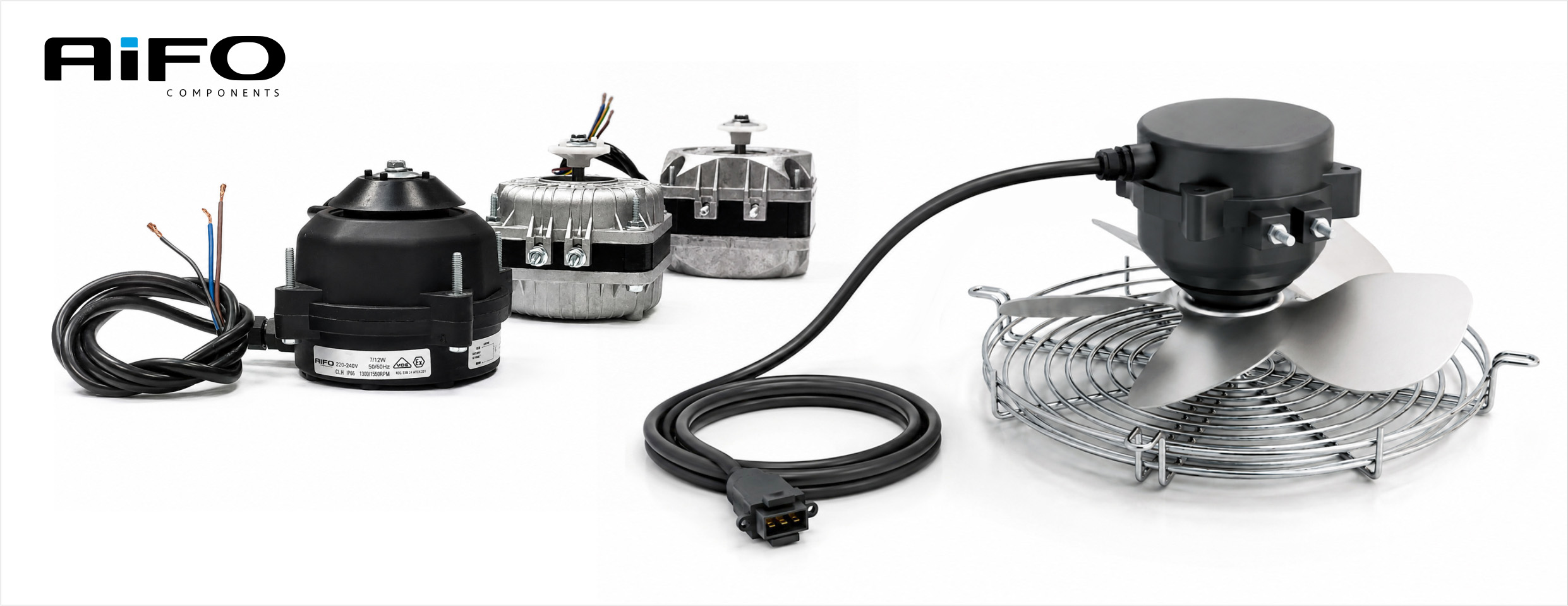
- EC fans – high energy efficiency at variable load, extended service life, lower power consumption vs AC motors.
- Refrigerant R290 (natural propane) – ODP = 0, GWP = 3, always less than 150 g, which reduces regulatory requirements and simplifies refrigeration system maintenance.
The use of environmentally friendly R290 refrigerant below the 150g threshold allows, in many configurations, installation without the involvement of certified F-gas personnel – one of the most important operational advantages of monoblocks in the current market realities.
Plug&play installation – what does it mean in practice?
Traditional refrigeration system installation is a multi-step process: piping design, soldering of copper connections, leak testing, refrigerant filling, commissioning and calibration. Each step requires specialized knowledge and often a Category I F-gas certificate.
The plug&play refrigeration monoblock reverses this logic. Since the entire refrigeration circuit is assembled and filled at the factory, the installer at the site performs only the electrical connection, installation in the wall partition (or on the roof of the chamber) and commissioning of the controller. The time from delivery to cooling start is less than one hour.
This eliminates not only the cost of specialized labor, but also the risk of installation errors, leaks at soldered joints, and the need to organize an F-gas service as early as the commissioning stage.
Energy efficiency of refrigeration monoblocks
Energy efficiency of refrigeration equipment is an increasingly important criterion both in terms of operating costs and ESG requirements of retail chains and investors. Monoblocks realize energy optimization in multiple ways:
- PUR insulation with a low thermal conductivity coefficient reduces heat gain into the cold room.
- EC fans provide high efficiency at part load – crucial for seasonal demand variability.
- The inverter compressor allows infinitely variable cooling power instead of costly full-power start/stop.
- AISI 304 steel coil in the condensate evaporation system replaces resistance heaters – lower electricity consumption in the defrost cycle.
The result is lower specific energy consumption expressed in kWh/year or kWh/m³ of the chamber – a measurable criterion when selecting a chiller for a cold room.
Integration with BMS and remote management of the refrigeration plant
The integrated refrigeration control system allows the monobloc to connect to master building management systems (BMS) via ModBus RTU protocol or directly via IoT Gateway. The operator gains:
- Remote reading of temperatures, alarm conditions and real-time operating status.
- Recording and archiving of operating data – the basis of predictive refrigeration service.
- Remote diagnostics and modification of controller parameters without the departure of a technician.
- Possibility of heat recovery thanks to plate condenser or special air extraction – waterloop option for heating hot water.
The shift from reactive to predictive service is a change that is particularly important with the limited availability of refrigeration service technicians: fewer on-site interventions mean less need for a scarce human resource.
Quality control and standards – a guarantee of reliability
A prerequisite for the plug&play concept to make sense is the certainty that the refrigeration unit arriving at the facility works exactly according to specification. Every AiFO Components unit goes through a multi-stage testing process in accordance with the requirements of the European market:
- Cooling system leakage tests – verification before leaving the production facility.
- Electrical testing according to EN 60335-2-89.
- Functional testing under conditions that simulate actual operation.
- Performance tests in test chambers in accordance with EN ISO 23953.
Frequently asked questions
For monoblocks with less than 150 g of R290 refrigerant, many configurations do not require the involvement of certified F-gas personnel. However, local regulations should be verified each time, as specific requirements may vary from one EU country to another.
Monoblocks are designed for small and medium-sized refrigeration chambers in the medium temperature (MT) and low temperature (LT) ranges. Typical applications include retail storage chambers, catering facilities and storage systems in food logistics.
Yes. The integrated control system supports ModBus RTU protocol and IoT Gateway, which allows full integration with any superordinate building management system (BMS).
AiFO Components’ monoblocks operate on natural refrigerant R290 (propane) with ODP = 0 and GWP = 3. The amount of refrigerant in the system is always less than 150 g, which minimizes regulatory requirements related to F-gases.
Summary
The shortage of refrigeration specialists is a structural feature of the European labor market – not a temporary phenomenon. Plug&play refrigeration monoblocks, such as AiFO Components’ units, respond to this reality in a technologically mature way: they simplify the installation of a refrigeration system without compromising on energy efficiency, durability and integration with BMS systems. For operators of commercial and foodservice cold rooms, it’s not a gadget – it’s the answer to a specific economic and personnel problem.
Check if the AiFO monobloc fits your refrigeration chamber
Our specialists will select the right model for your temperature requirements and chamber volume – without obligation, within 24 hours.