Technical profiles play a key role here. Today they perform far more functions than traditional spacer elements: they form an integral part of the cabinet structure and influence thermal insulation, rigidity, assembly speed and the long-term reliability of the appliance.
Thermal bridges in refrigerated cabinets – the main cause of energy loss
Every metal connection between the interior of the refrigerated chamber and the surroundings becomes a potential thermal bridge. The result is an uncontrolled flow of energy, which leads to:
- increased electricity consumption,
- condensation of moisture on the housing,
- more frequent compressor operation and faster wear of the condensing unit.
Technical profiles made from materials with very low thermal conductivity effectively interrupt the heat flow path. As a result, the entire appliance achieves considerably better insulation parameters and a higher energy class.
PU-K2 body profiles – the foundation of a refrigerated cabinet structure
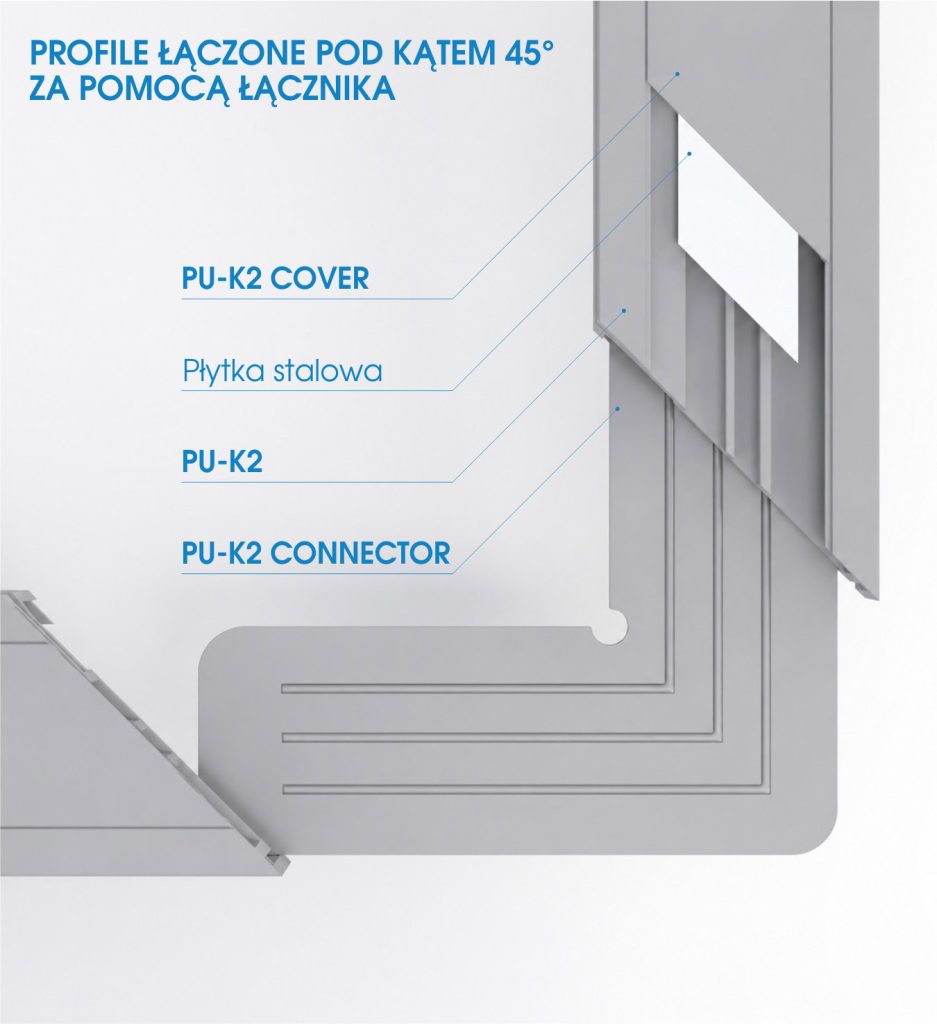
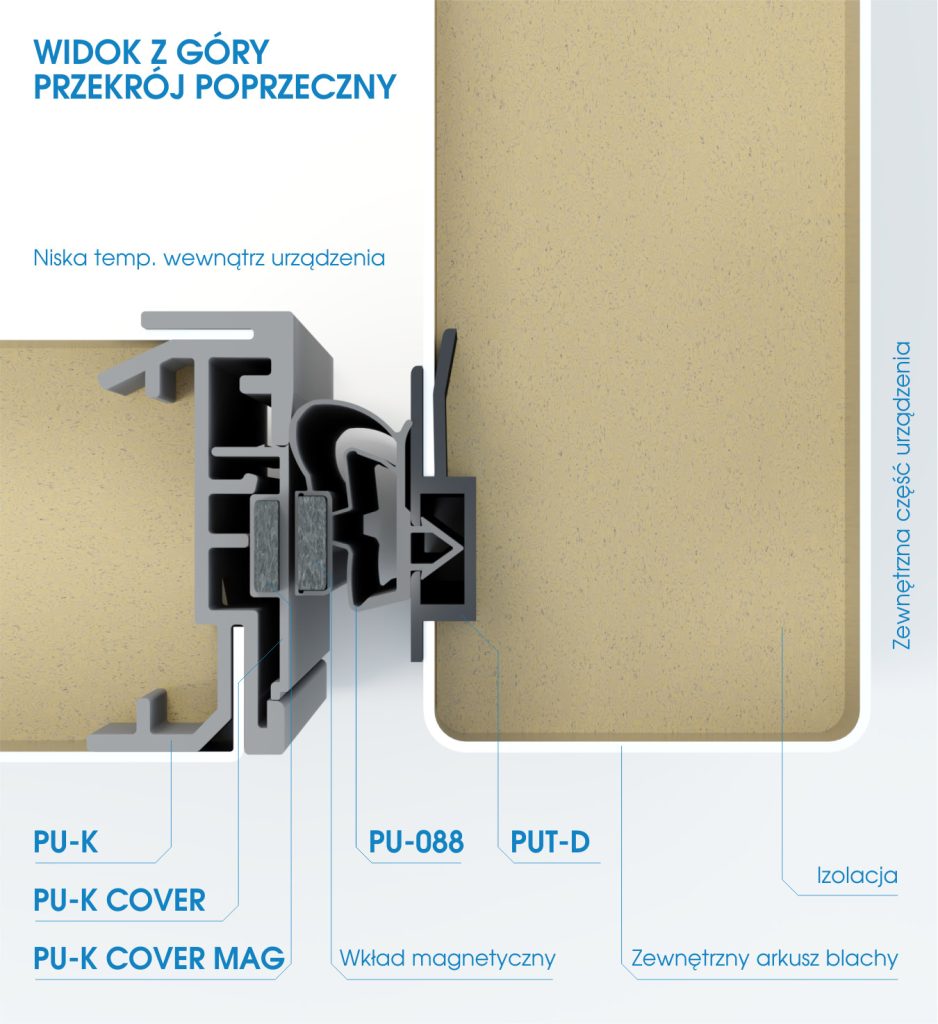
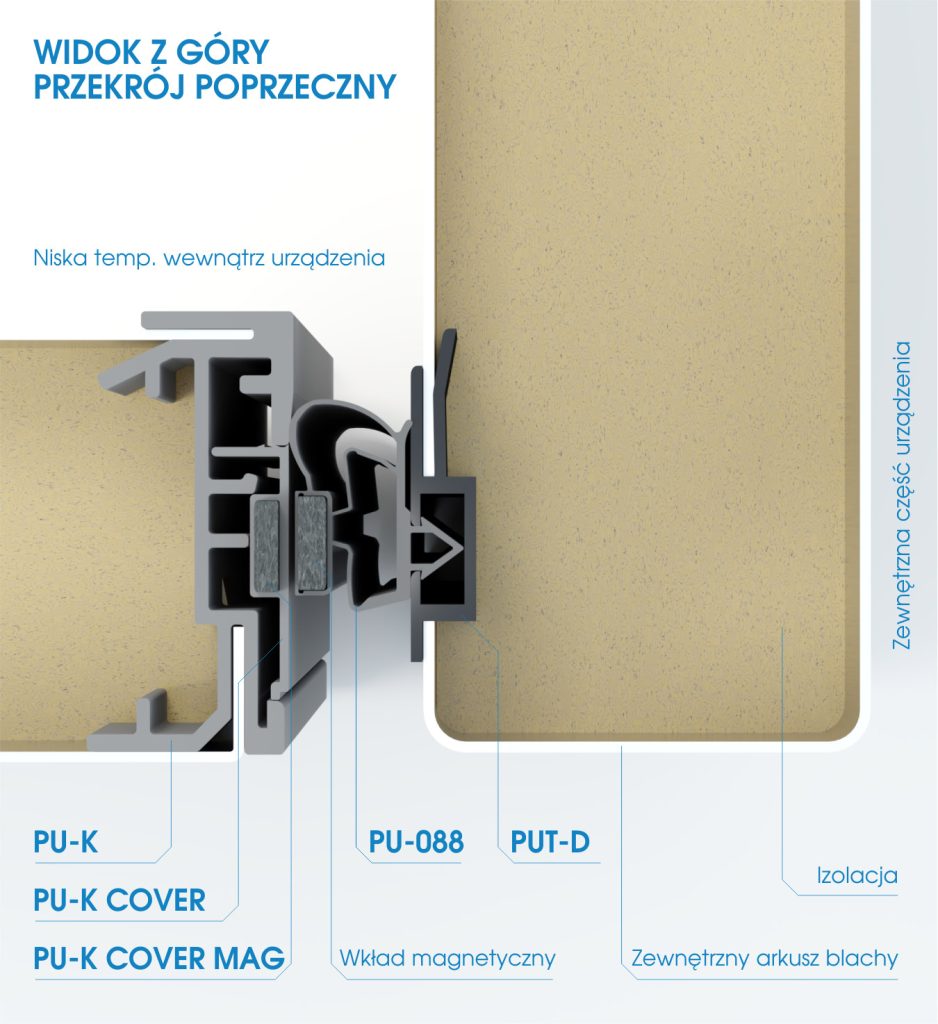
One example of a solution that meets today’s design requirements is the PU-K2 body profile set from AiFO Components, developed specifically for the bodies of refrigerated cabinets insulated with polyurethane (PU) foam.
The design of the PU-K2 profiles delivers several key benefits at once:
- effective elimination of thermal bridges between the inner and outer skin,
- a constant PU insulation thickness – anywhere from 40 up to 120 mm,
- guidance and stabilisation of components during assembly,
- greater body rigidity while at the same time reducing its weight,
- precise mounting bases for further components (electrical wiring, heaters, hinge fixings),
- a wide contact surface for the magnetic door gasket.
The right profile geometry also supports even distribution of the polyurethane foam during insulation, reducing the risk of voids and local weak points in the structure.
Shorter assembly time and repeatable series production
One of the biggest advantages of modern technical profiles is the simplification of the production process. Precisely engineered profiles and assembly connectors:
- reduce the number of individual assembly parts,
- shorten the body assembly time,
- reduce the number of production operations,
- reduce the risk of assembly errors,
- ensure high repeatability in series production.
For a manufacturer of refrigerated cabinets this means higher line output, lower manufacturing costs and more consistent quality of the finished appliances.
Greater structural rigidity with thinner sheet metal
Insulating bodies with polyurethane foam in combination with technical profiles creates a structure with high spatial rigidity. In practice, this translates into:
- smaller deflections of the body walls,
- the option to use considerably thinner sheet metal (0.5-0.7 mm),
- reduced deformation during foaming,
- more stable mounting of condensing units, doors and interior fittings,
- retention of the geometry throughout the entire service life.
All of this has a direct effect on the durability of the appliance and on how well its components work together.
PU-D door profiles – precise design of refrigerated doors
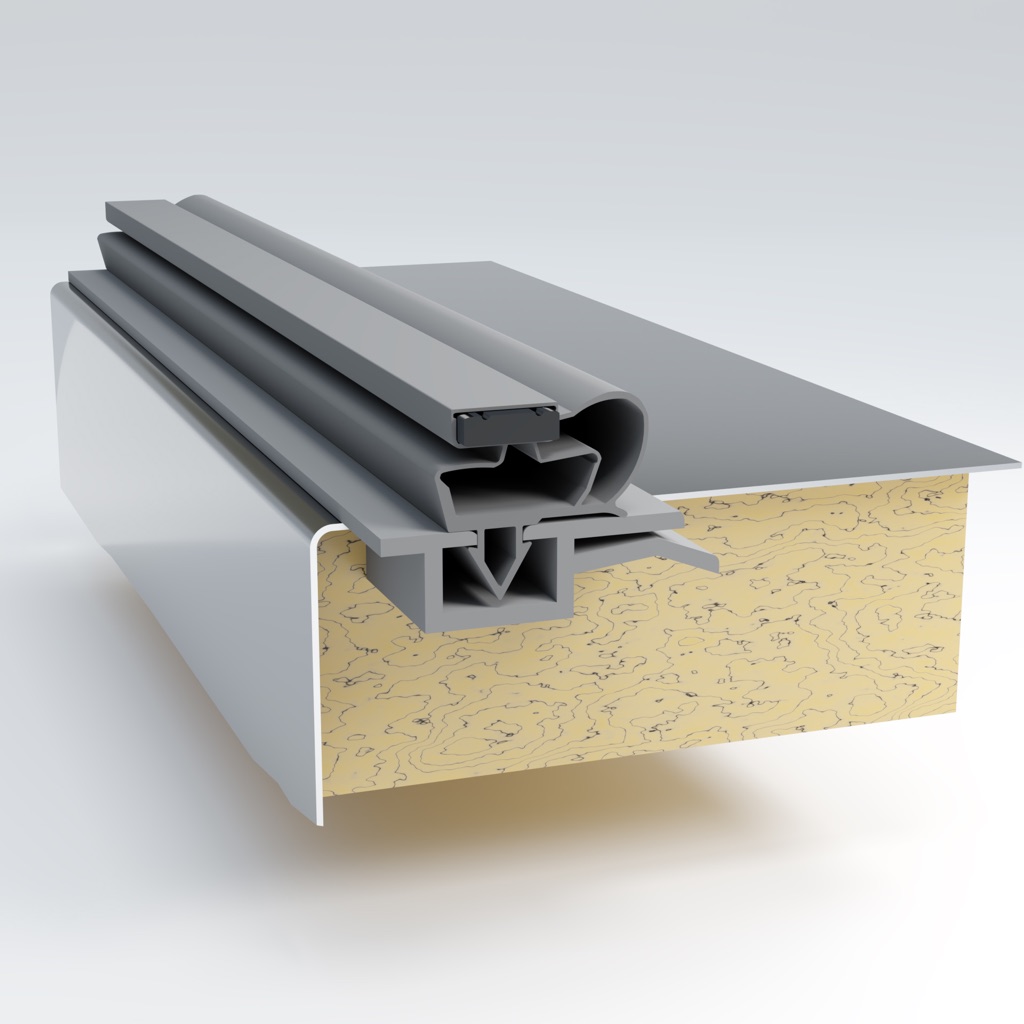
The technical profiles used in the doors are just as important. AiFO Components PU-D profiles were developed for door leaves insulated with PU foam. Their role is:
- eliminating thermal bridges within the door frame,
- maintaining adequate rigidity of the door leaf,
- correct positioning of solid and glazed doors,
- a stable mounting base for the hinges,
- proper seating of the magnetic gasket,
- even distribution of the PU foam inside the door.
TPE magnetic gasket – the component that determines tightness
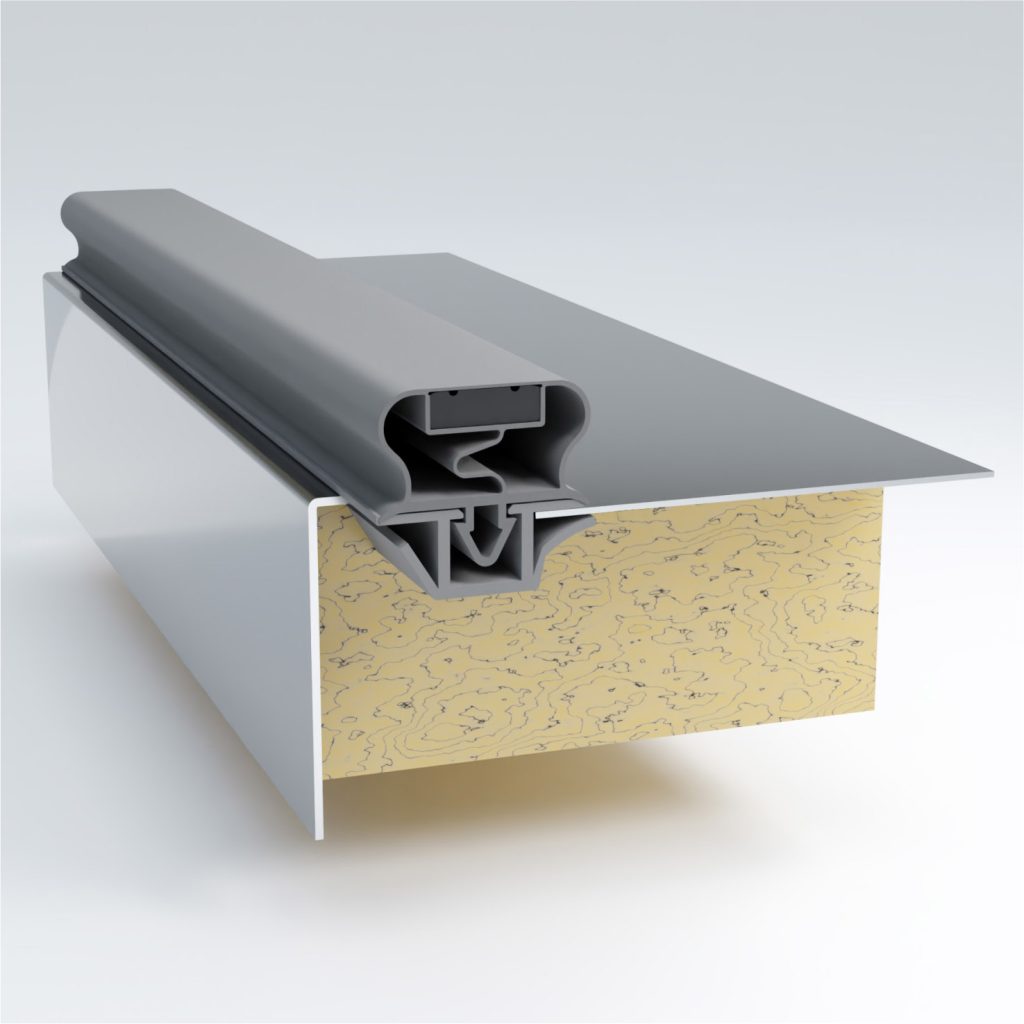
Even the best-designed body will not deliver high energy efficiency without proper sealing. That is why welded magnetic gaskets made of TPE elastomers, such as the PU-033 and PU-036 models, are increasingly used. They guarantee:
- very high tightness around the entire door perimeter,
- resistance to ageing and to frequent contact with detergents and disinfectants,
- flexibility even at low temperatures,
- a wide operating temperature range (-40°C / +70°C),
- durable welded corners,
- an attractive appearance and easy cleaning.
Welded corners eliminate the leaks typical of mechanically joined gaskets, and TPE copes excellently with repeated door opening and closing cycles.
Self-closing hinge – an underrated element of energy efficiency
Door tightness depends not only on the quality of the gasket, but also on how it is pressed against the frame. This is why high-quality self-closing hinges such as the ZW-TRS-1 are so important. They make it possible to:
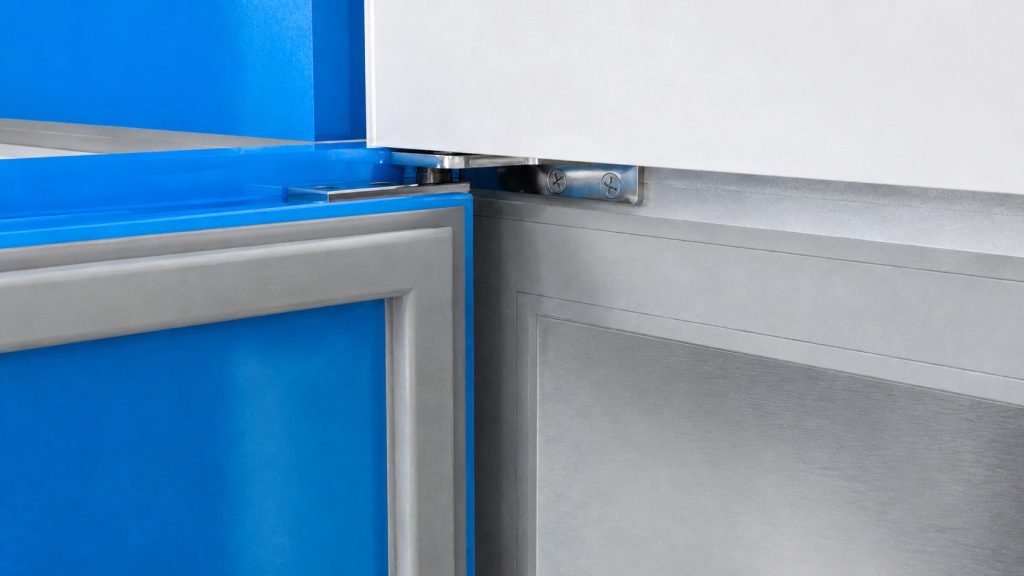
- close the door automatically after every opening,
- maintain constant gasket pressure around the entire perimeter,
- eliminate cases of doors left ajar,
- reduce the infiltration of warm, humid air,
- limit frost build-up,
- extend the service life of the gasket,
- reduce the number of operating cycles of the condensing unit.
In practice, a properly selected hinge directly lowers the energy consumption of the entire appliance.
An integrated system of components = the lowest energy consumption
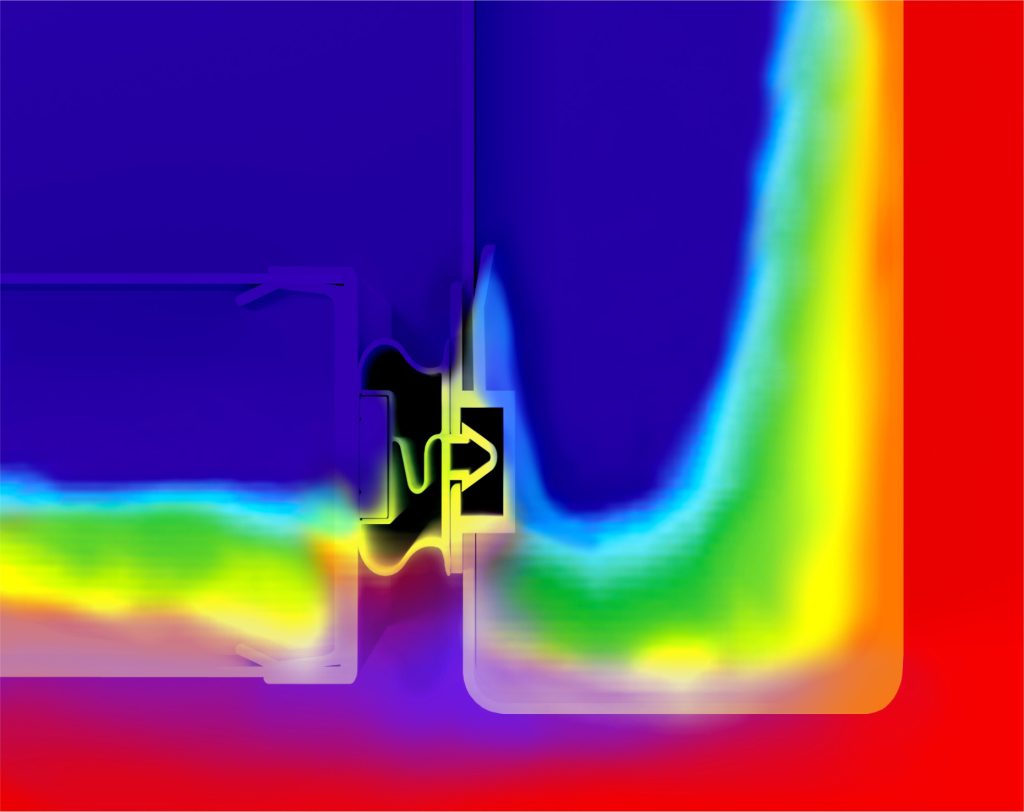
The highest energy efficiency of a refrigerated cabinet is achieved only when all the elements work as a single integrated system:
- PU-K2 profiles stabilise the body and eliminate thermal bridges,
- evenly distributed PU foam insulation ensures constant thermal parameters,
- PU-D profiles guarantee the rigidity of the doors,
- the magnetic TPE gasket is responsible for tightness,
- the ZW-TRS-1 self-closing hinge maintains the correct door pressure thanks to precisely engineered pivot axis geometry.
Only when all of these elements work together is it possible to hold the set temperature with minimum energy consumption.
Summary
Today’s technical profiles are far more advanced components than traditional spacer elements. Solutions such as PU-K2 and PU-D from AiFO Components form the basis of modern refrigerated cabinet design. Combined with welded magnetic TPE gaskets and ZW-TRS-1 self-closing hinges, they create a complete system that speeds up assembly, increases structural rigidity, eliminates thermal bridges and significantly reduces energy consumption.
It is precisely this comprehensive approach to designing the body and the doors that today determines the competitiveness of refrigeration appliances and their compliance with the market’s growing requirements for energy efficiency, durability and build quality.