It’s not just about the temperature
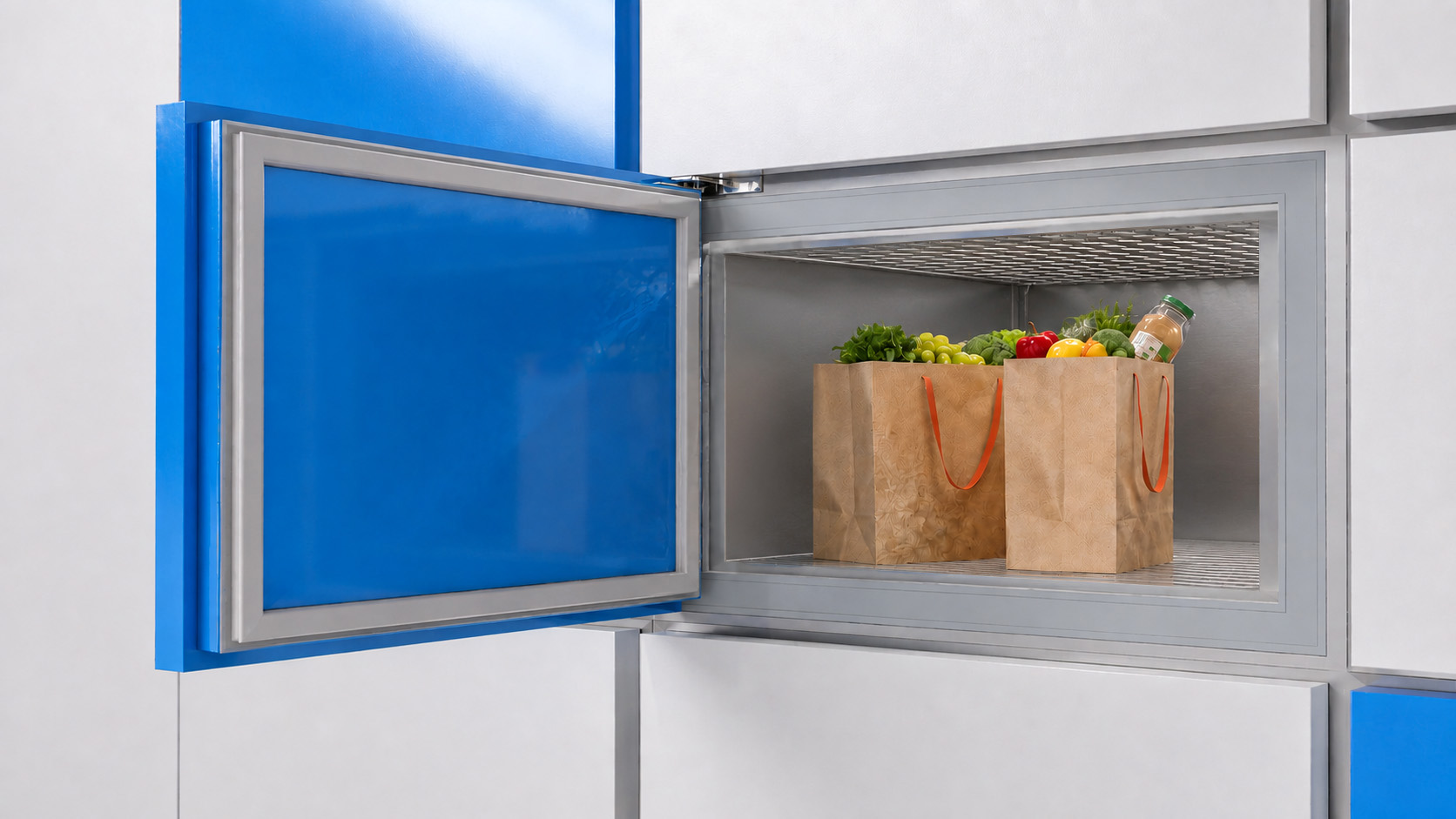
From a manufacturer’s perspective, reaching the target chamber temperature is a necessary but insufficient condition. A sufficient condition is a uniform temperature distribution throughout the entire chamber volume –this is what determines the quality of food storage, compliance with HACCP, and the number of customer complaints. A temperature variation of 2–3°C can result in localized bacterial growth, uneven cooling of products, and moisture condensation.
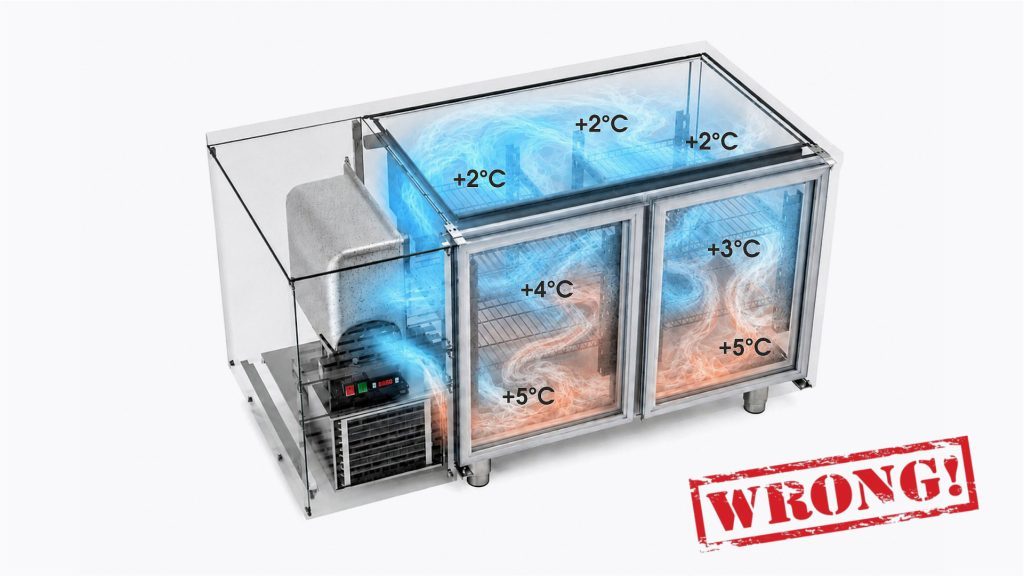
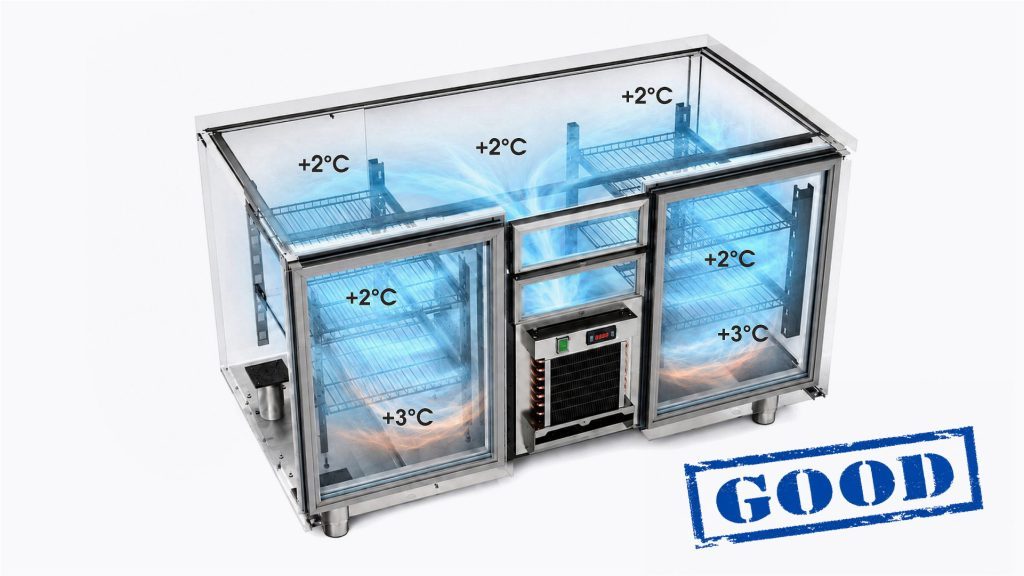
In industrial practice, three different concepts for organizing a refrigeration system are used. They differ fundamentally in the way air is distributed inside the chamber–and it is this parameter that most significantly determines their usefulness.
Version 1 – A classic layout composed of components
The manufacturer designs and builds the entire system from scratch: selecting the compressor, heat exchangers, and expansion valve; performing soldering, vacuuming, and refrigerant charging; installing the control system; and commissioning the system. This requires engineering and production staff, including refrigeration designers and certified F-gas technicians.
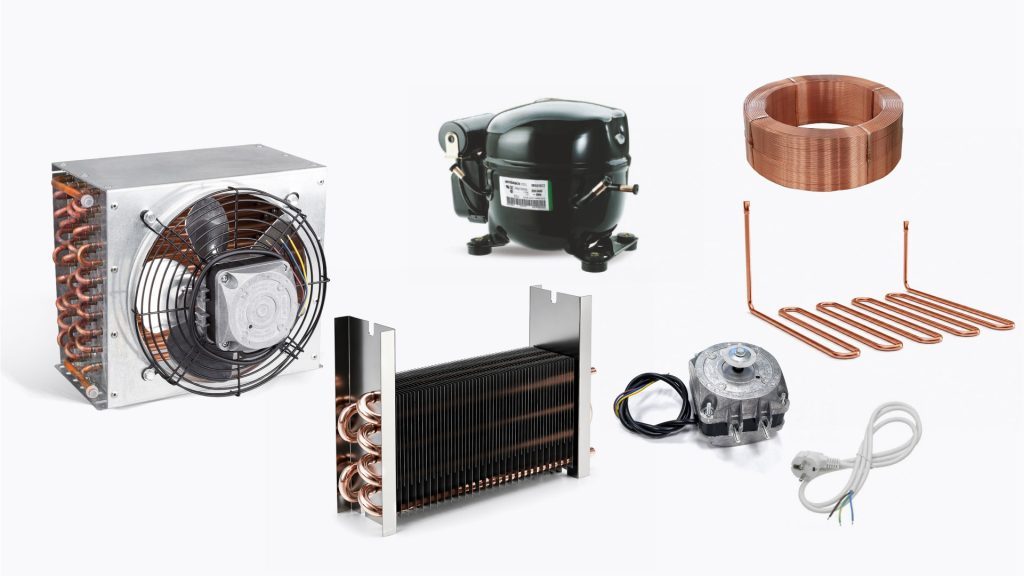
Advantages: maximum design flexibility, the highest potential for energy optimization, and a perfect fit for non-standard dimensions and requirements.
Key limitation: Air distribution inside the chamber depends entirely on the designer’s design. Errors in the placement of the evaporator or fans result in dead zones and thermal asymmetries. Achieving good temperature distribution requires extensive experience and individual testing for each project.
When to use: low-volume projects, premium projects, and custom equipment; manufacturers with a seasoned team of refrigeration engineers.
Version 2 – Semi-modular system (pre-assembled fan-cooled heat exchanger + chiller unit)
The table manufacturer uses a factory-optimized fan-cooled heat sink–an example is the AiFO PLP-490C from the range of refrigerated furniture components, as well as a ready-made condensing unit. The table manufacturer handles the refrigeration connections, vacuuming, refrigerant charging, and control system installation; however, engineering expertise in refrigeration and F-gas regulations is still required.
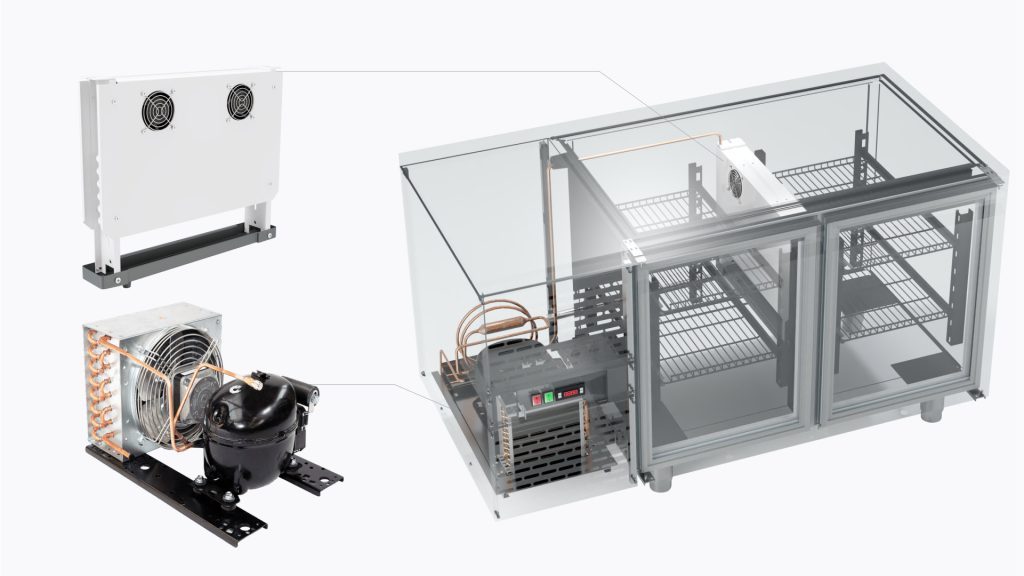
Advantages: shorter design time, good configuration flexibility, and higher repeatability than with a modular system.
Key advantage over Version 1–airflow: AiFO’s ready-made fan-cooled heat exchangers are designed to ensure uniform airflow and an optimal flow profile. This eliminates the need to individually test temperature distribution for each configuration, and the table manufacturer can rely on the component’s documented performance characteristics.
When to use: mass production with configurational flexibility; the optimal compromise for most manufacturers.
Version 3 – AiFO Central Monoblock
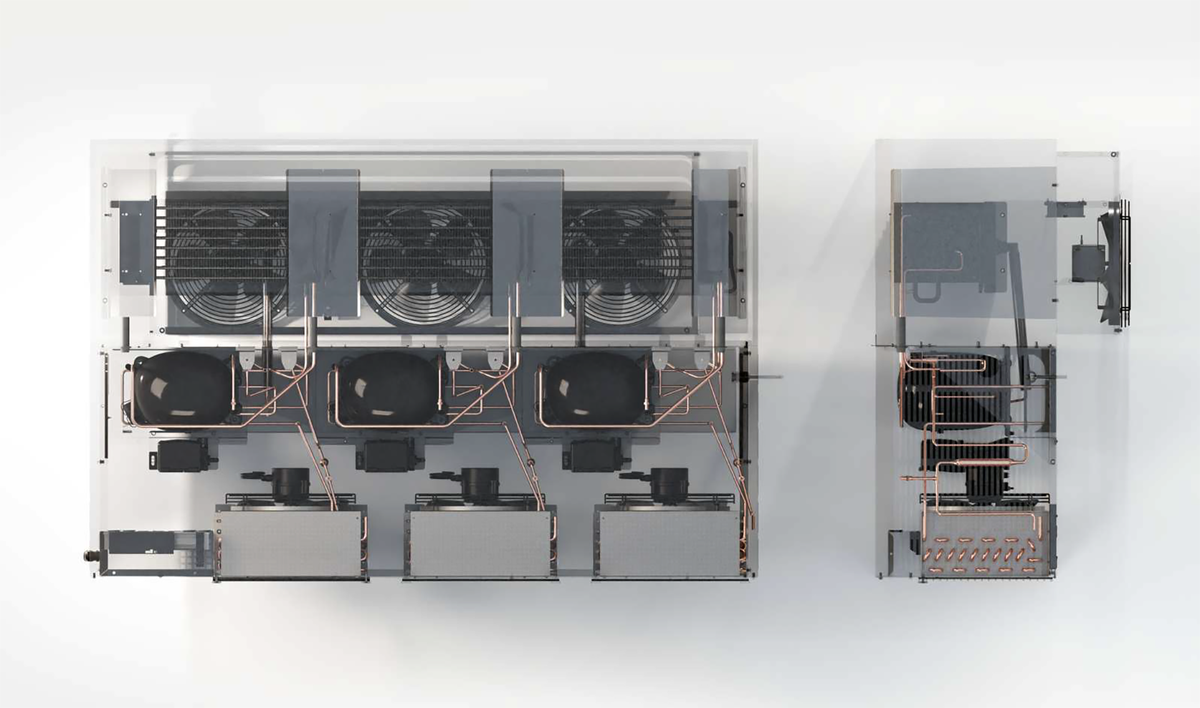
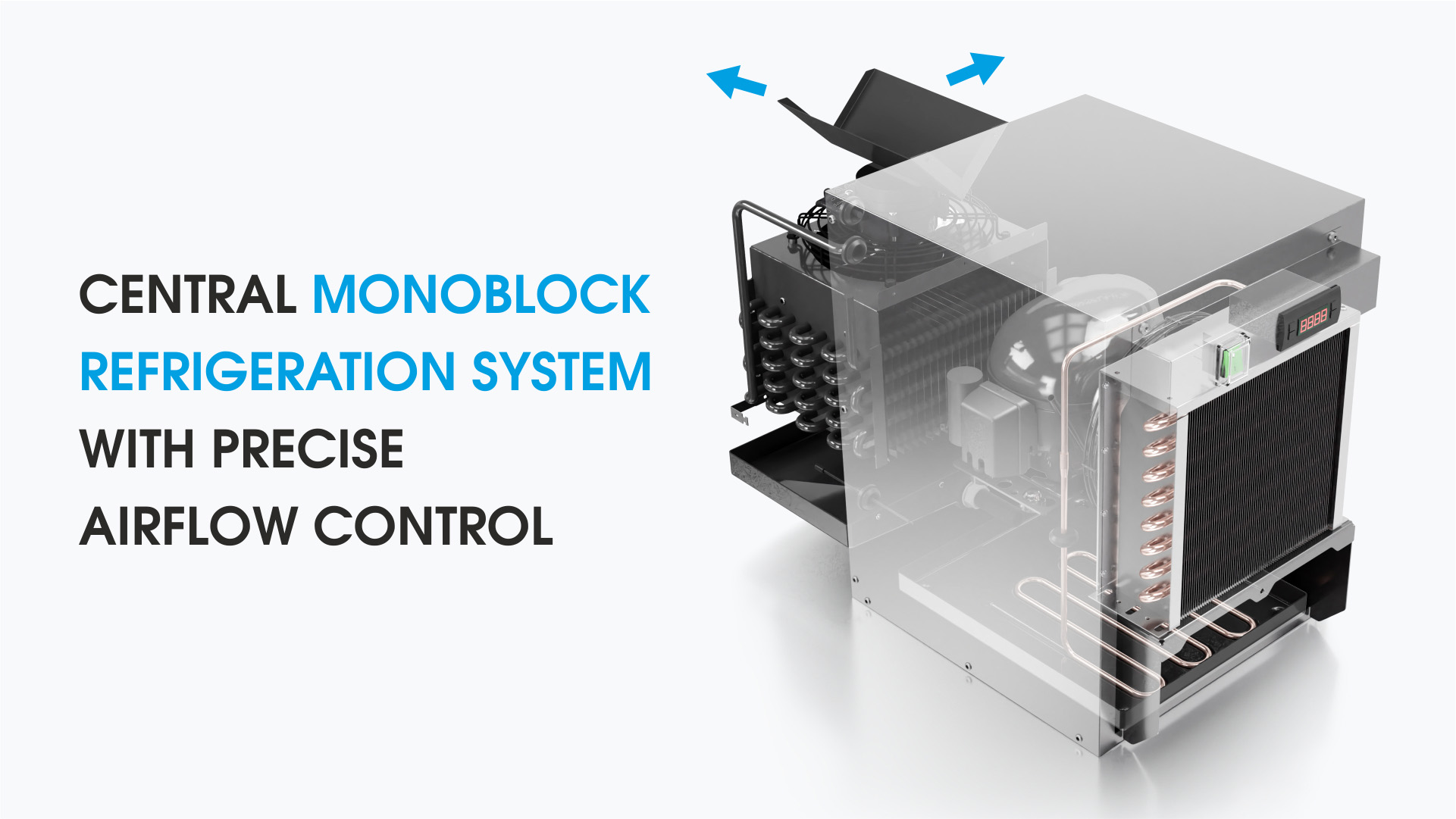
A monoblock is a factory-sealed module that contains a complete refrigeration system within a single housing: a compressor, evaporator, condenser, expansion valve, fans, control systems, and a condensate evaporation system. The table manufacturer installs the module and connects the power supply–without soldering, evacuating, charging with refrigerant, or performing electrical wiring.
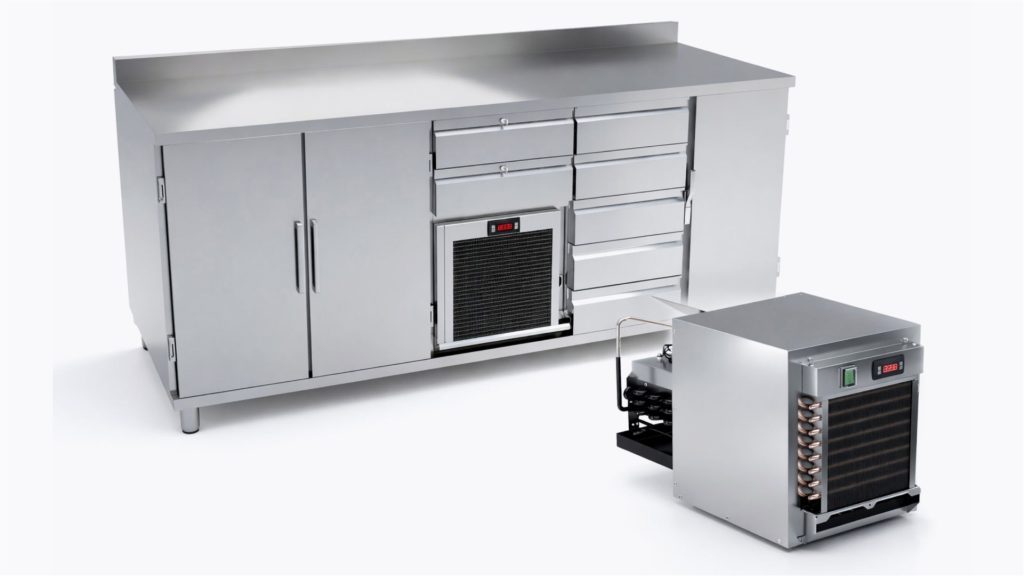
AiFO manufactures central monoblocks for refrigerated display cases (series MBP-STC) in both refrigeration (HBP: +2°C / +8°C) and freezing (LBP: -25°C / -15°C) versions, in several sizes tailored to chamber capacities ranging from 400 to 700 liters. The standard models MBP-STC-H400.SA, MBP-STC-H450.SA, MBP-STC-H550.SA, and MBP-STC-H700.SA are powered by 220–240 V / 50 Hz and use conventional defrosting. The deep-freeze model MBP-STC-L400.SA is equipped with hot-gas defrosting.
Key technical features:
- stainless steel housing, corrosion-resistant and easy to clean
- compressors and components from leading manufacturers: EMBRACO, SECOP, FERROCOIL, DIXELL, SANHUA
- Long-term testing in a climate chamber – 100% of components tested during the manufacturing process
- Standard 3-meter connection cord; temperature controlled by a thermostat included in the set and pre-programmed at the factory
- a device equipped with a set of sensors
- Fast delivery from the manufacturer’s own warehouse located in central Europe (Bochnia, Poland)
A key technical advantage–optimal airflow:
Central installation ensures symmetrical “top” airflow–air is distributed evenly from the center of the chamber, with balanced flow path lengths. This eliminates uneven temperature distribution within the table’s storage chamber and dead zones, achieving the most optimal temperature distribution among the available designs. This directly translates to the highest quality of storage, ease of compliance with HACCP requirements, and a reduction in customer complaints.
When to use:
Series and mass production, OEM; priorities: repeatability, scalability, and the highest quality of temperature distribution without the need for engineering expertise in refrigeration or production expertise in F-gases.
Final Recommendations for Designers and Engineers
In modern commercial refrigeration, rated cooling capacity is no longer the dominant criterion for selecting a system design. Parameters that are more difficult to measure during the design phase are of decisive importance: uniformity of temperature distribution, quality of the airflow profile, and the rate of recovery after the door is opened.
The classic modular design remains the optimal choice for small-batch, custom, and premium solutions–provided you have an experienced team. Its weakness is that airflow is entirely dependent on the quality of the design.
The AiFO semi-modular system with a pre-assembled fan-cooled heat sink offers a good cost-to-performance ratio: shorter implementation time, excellent temperature distribution, and higher repeatability than with a modular system.
The AiFO central monoblock (MBP-STC series) is the most efficient solution for mass production. Symmetrical central airflow, premium components, R290 refrigerant, and delivery from our own warehouse in Poland make it a ready solution to the shortage of specialized engineers and refrigeration technicians–without compromising on quality. According to the manufacturer, the new unit can be brought to market within a month.
Even air circulation and temperature stability–rather than nominal cooling capacity alone–are what ultimately determine the quality of a professional foodservice appliance.
For more information on central and side-mounted monoblocks for refrigerated display cases, as well as fan-cooled condensers for semi-modular systems, see the AiFO product catalog and visit aifo.pl/monoblocks.