Are you wondering what differentiates various sink bowl models? What should you pay attention to when selecting a sink for your project? We encourage you to read the following text, where we highlight the main aspects of choosing a sink bowl, an essential element of any commercial kitchen.
Types of sink bowls
Fundamentally, there are two types of sink bowls:
- sink and bowls to weld,
- sink and bowls to overtop – these are electro-polished and have an aesthetically finished edge.
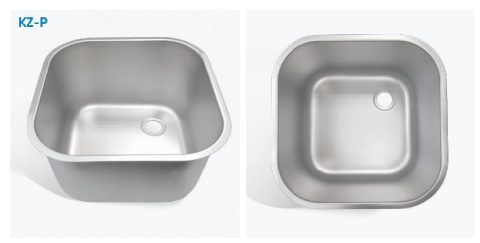
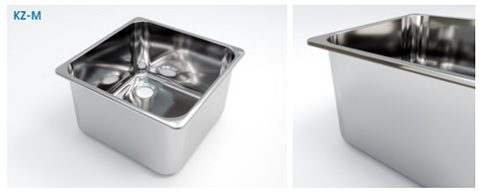
Important parameters when selecting a sink bowl
Drain location
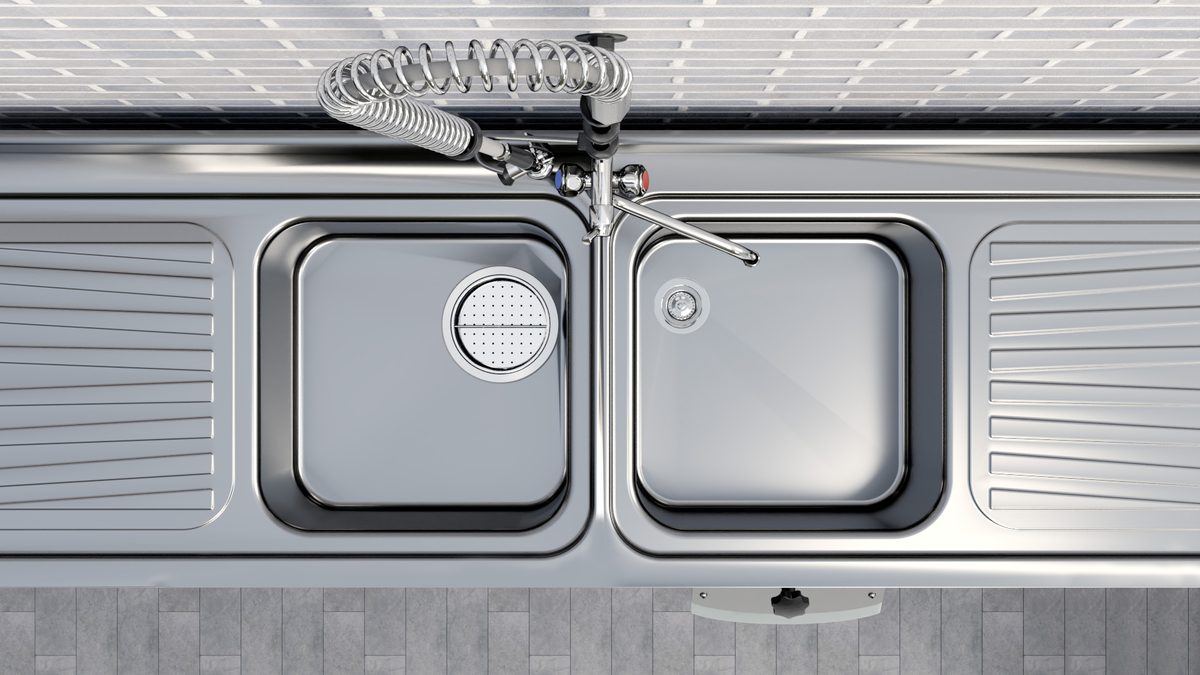
Each customer can choose the location of the drain. At AiFO Components, we offer left, right, and centrally drained bowls.
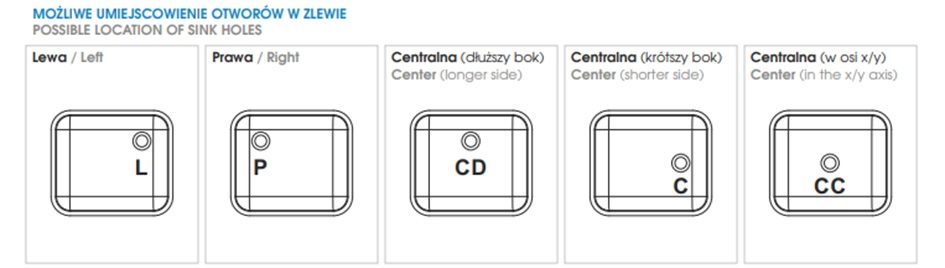
We also offer the service of punching a hole in the bowl according to the customer’s needs and provided specifications. Upon request, we can also supply a sink bowl without a pre-punched drain.
Dimensions
One of the most critical parameters that allow for the selection of an appropriate sink bowl for your space and project. In our offer, we have many bowls to weld and overtop. Our technical advisors can match the right sink to the neutral furniture based on the provided technical documentation.
Finish
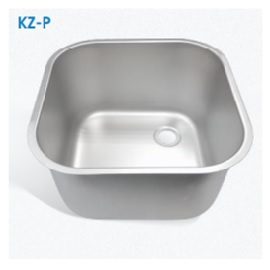
The sink bowl can be either matt or electro-polished. In exposed areas where aesthetics and appearance matter, the electro-polished sink bowl is often the preferred product.
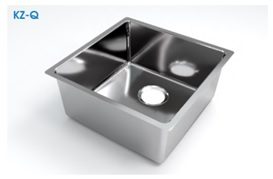
Flow direction
The slope enables water to flow to the drain and prevents it from pooling at the bottom of the bowl. Depending on the model, sink bowls have a slope direction towards the corner (the most commonly used solution) or towards the edge.
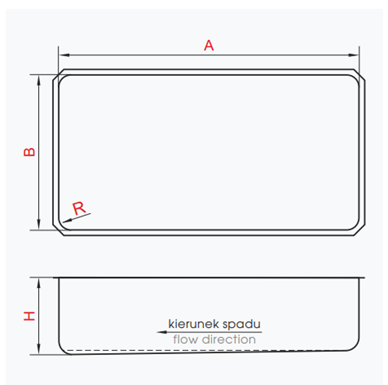
Radius of rounding
Sink bowls differ in radius depending on the model. This solution facilitates cleaning the bowl and maintaining a high level of hygiene. The absence of rounding, i.e., a right angle, would cause dirt to accumulate in the recess and require more thorough cleaning by the staff. The rounding radius is also very important from the designer’s point of view.
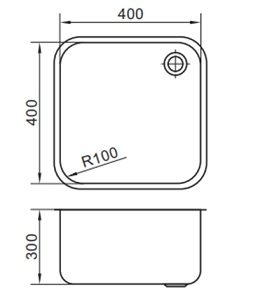
Material
Sink bowls are made of AISI-304 stainless steel. It’s characterized by the required durability in the food industry. It’s resistant to corrosion and substances found in the gastronomy.
Sheet thickness
Commonly, sink bowls with a sheet thickness of 0.8 to 1 mm are used. The difference is significant, especially when punching a hole, so it is not as crucial in the finished product.
Interested in AiFO Components sinks and bowls? The products in our offer are widely chosen by commercial kitchens, service outlets, hotels, and equipment suppliers. The full list of sink bowls is available in the catalog “Components for Neutral and Catering Furniture” and in our B2B store.
We encourage you to subscribe to our NEWSLETTER to follow current trends and stay updated with our offer.
In case of any doubts, our technical advisors will be happy to answer all your questions. Contact details via email, phone, or the contact form are available in the CONTACT page.